

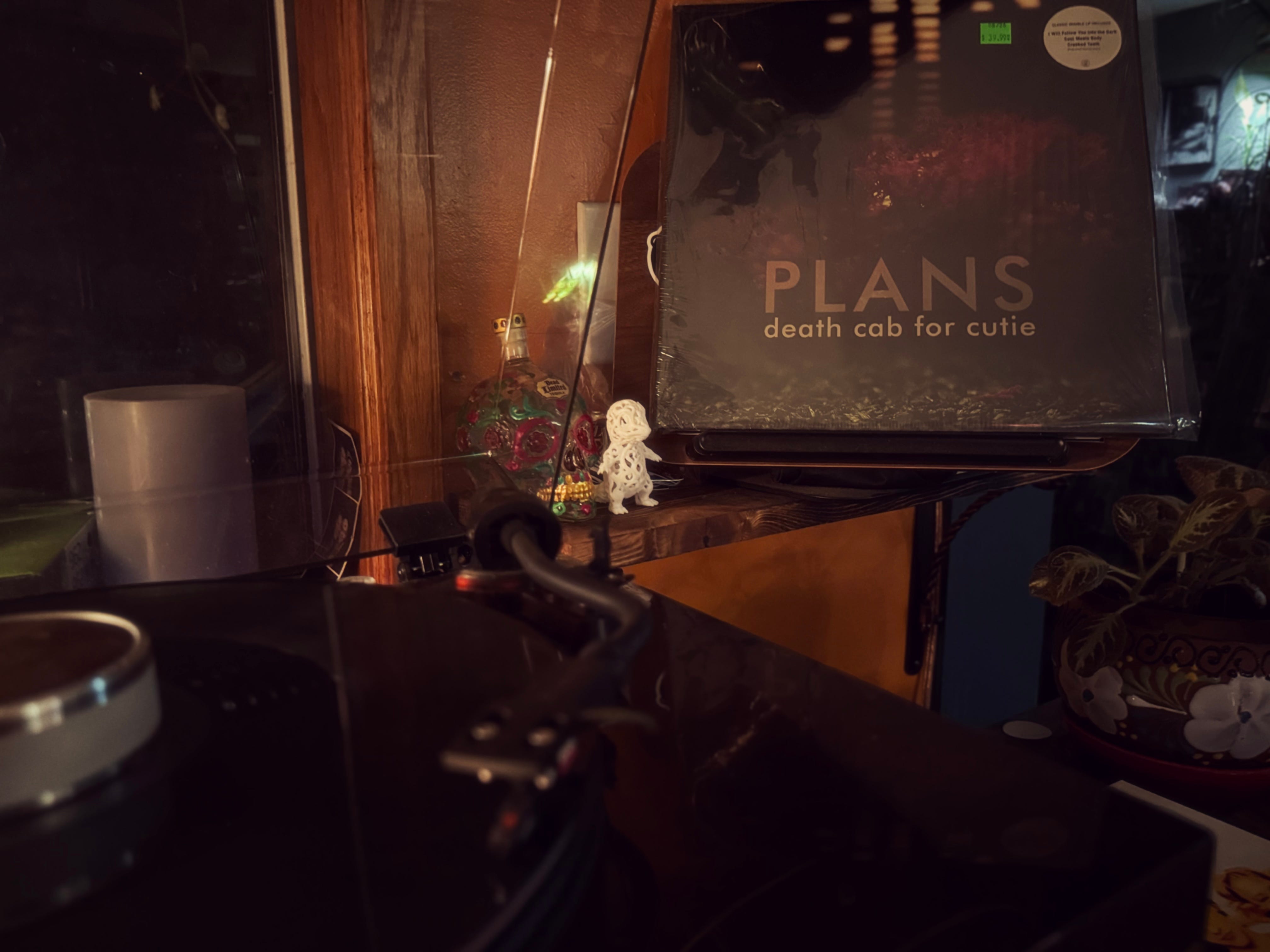
One day, Death Cab was just there. I couldn’t tell you exactly when they started appearing in my library, I truly have no recollection, but like a best friend – the minute you meet, you feel like you’ve known them your whole life. And like two old friends sitting at a coffee shop arguing over their origin story, does it matter? Was it Transatlanticism? Was it The Photo Album? Does it matter? Not really, but we can all agree on Plans.
Released in August of 2005, Plans was Death Cab for Cutie’s move to a major label. With four releases on the indie label Barsuk Records, Plans answered the question – could they make the leap. The answer a resounding YES! The album debuted at number 4 on the Billboard 200 and stayed on the charts for nearly a year. Plans would go on to platinum certification and would earn the band their first Grammy nomination.
This is an album obsessed with mortality dressed up as a breakup record. Lead singer Ben Gibbard has always written about love as something delicate and temporary but here that fragility gets manifested. “I Will Follow You into The Dark” imagines death not as an ending, but a promise kept alongside someone you love. The single-take, hushed ballad became the band’s best-selling single despite barely denting the charts upon release. Ultimately the song would go on to obtain double platinum status.
And then there is arguably, one of the saddest, most devastating songs ever recorded – “What Sarah Said.” Gibbard finds himself in a hospital waiting room as people disappear into “a room, and the room begins to slowly get smaller” until we hear Gibbard tell us – “love is watching someone die… So who’s gonna watch you die?” For a generation that came to this album in their twenties and thirties, how much more power does this song carry year-after-year as they live this exact moment? Every time I hear this song, I reflexively catalog a list of those people in my life… not those who are going to watch me die, but those I will, without question be right next to in those final moments. Every time I hear this song, my heart breaks just a little bit more.
This tension is what fuels the entire album. The record’s biggest hit and the song that finally cracked the Hot 100, “Soul Meets Body” deceptively packages itself as a bright, driving pop song, a summer single to play into the wee hours of the morning. And this is perhaps Death Cab’s best trick, their ability to package crushing lyrics into ear-pleasing arrangements as a deeper reading of the lyrics reveals the crushing intent. “Soul Meets Body” is a song about wanting a body and a soul to belong to the same place at the same time, a thought that only makes sense if you already suspect they don’t. Chris Walla’s production on the song is warm and more polished than anything the band had done before but it’s all in service of intimacy, Gibbard’s hushed voice feels earned and not just an affectation.
Pushing nearly 25 years since its release, Plans hold up not because it invented anything, but because Death Cab refused to trade their sound for a major label. Plenty of indie bands making the jump abandon what got them there in the first place or double down so hard their subsequent release feels almost defensive. With Plans, Death Cab simply feels like they were growing up, settling into where they were at that moment in their life. Were they more confident, more expensive sounding? Yes. But were they still writing from that same aching, uncertain place? Again, yes. This is an album proclaiming that love and fear are soulmates, and it never once pretends that growing up means outgrowing that.
I got to know them from scrubs but stayed till today
Brings me back 🎶🎼🎵🎶🎶🎵🎼🎹💙💙💙