

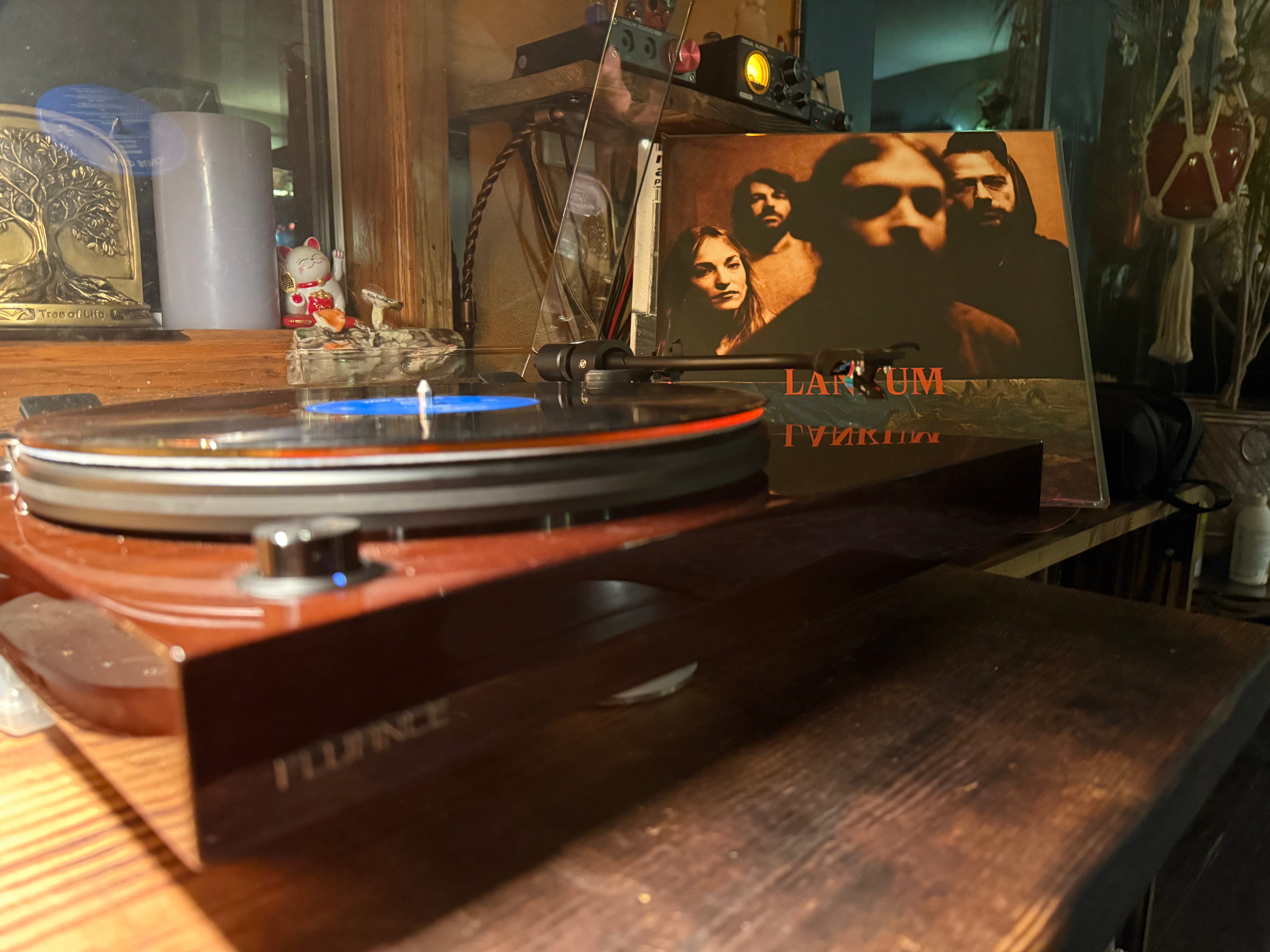
Ever wondered what Radiohead might sound like if they’d grown up playing in Dublin pub sessions and the music was four hundred years old? Let me introduce you to Lankum. More specifically, let me introduce you to 2023’s False Lankum.
But like Radiohead, the version of Lankum that made False Lankum had to be earned. The four piece band consisting of brothers Ian and Daragh Lynch, Radie Peat and Cormac MacDiarmada, began in 2014 as Lynched — named after the brothers’ surname until the word’s darker associations made the name untenable — releasing Cold Old Fire before becoming Lankum proper in 2017 with Between the Earth and Sky -- each record darker, heavier and more ambitious than the last.
Pathways mean something here. How can they not? At their core, Lankum is an Irish folk band breathing new life into music handed down from generation to generation. There are rules involved here and Lankum works to break every one of them -- how else do you make an album that aspires to heavenly beauty while reveling in devilish cacophony? If you’re thinking happy-go-lucky Irish jigs, disabuse yourself of that notion immediately. The band holds kinship closer to the likes of Sunn O))) than The Dubliners.
Like so many in our current era, Covid lockdowns became a defining moment for Lankum. Preparing a performance to be livestreamed from Ireland’s historic Abbey Theatre titled A National Disgrace, the band hit upon an epiphany — weave all their songs together into a single continuous piece.
The band is saying directly to you, we didn’t create this darkness, but we refuse to bury it.
“Figuring out how to make a song slowly morph and grow into another, even if there was nothing matching it,” said guitarist Daragh Lynch.
That revelation became the cornerstone of False Lankum — twelve interconnected songs unfolding across an epic seventy-minute duration, less a collection of songs than a symphony imitating the sea: crashing waves punctuated by deceptive moments of tranquility.
And then there are the fugues – three short, abstract soundscapes serving as intermissions. Recorded as one continuous improvisation and then dissected, the fugue is allowed to serve double duty as musical interlude and that psychological state in which a person loses all sense of identity.
If the fugues dissociate you, then Radie Peat’s vocals ground you. The accolades laid at Peat’s doorstep almost certainly would make her blush. Otherworldly, fierce, like moonlight playing on swirling dust … the Irish Examiner called her one of the great modern voices in folk or any other music. While the cynical listener might scoff at this, the album’s opening track forces you to see the error of your ways. Peat’s voice stands alone for the song’s first sixty seconds demanding you follow her on a journey into the story of a young girl who died for love, four hundred years in the telling.
“Go Dig My Grave” arrives in Lankum’s songbook carrying centuries of grief. A traditional ballad that travelled from the British Isles to the Appalachian Mountains and into the hands of Jean Ritchie, who recorded it memorably with Doc Watson at Folk City in 1962. Peat, who learned the song by hearing Ritchie’s recording, carries that lineage forward into something altogether darker. Where Ritchie’s version is an Appalachian folk ballad, Peat and Lankum turn the song into a nine-minute, doom-folk dirge filled with Irish keening (a vocal lamentation for the dead) and a chilling mix of traditional instruments used in nontraditional methods to create a terrifying wall of sound. And just like that, the stage is set for everything that follows.
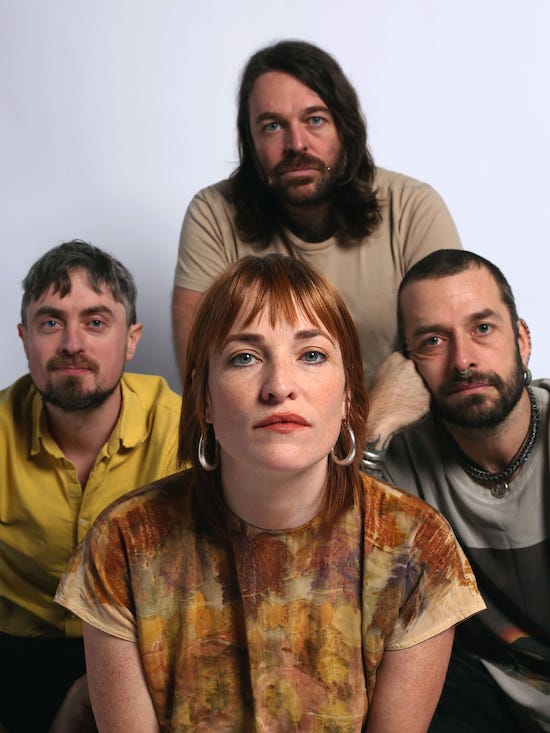
Of all the considerable baggage this album carries, perhaps none is more insidious than its method — the way Lankum excavates the darkness buried inside these songs and refuses to let you look away. In an interview with The Attic, Ian Lynch described what he feels as the band’s manifesto.
“In the past, Irish music was misrepresented in a way that it was all really happy, upbeat and frivolous. But there is another aspect to it — very dark and much grittier, which usually people don’t realize — so we really enjoy finding morbid dolls buried and bringing them back to show to people.”
Dark, foreboding, haunting -- not words most people reach for when describing Irish folk music. False Lankum is like a Rorschach test where the beautiful butterfly slowly turns into something horrific upon deeper reflection – it was always there -- you just missed it on casual observation. This album demands you sit with it -- and let me state this plainly – if you are one who prefers their music easy, accessible and radio friendly, this album is not for you. But if you are of the other sort, one who enjoys following the breadcrumbs a band leaves even when they lead to a witch’s house, then you will be rewarded handsomely. This is an album that will be talked about twenty and thirty years from now.
Lynch is unambiguous about the stakes involved: “We have a bit of a personal mission to try to redress the balance.”
The album’s liner notes tell the story of those morbid dolls’ excavation, as in the case of “On a Monday Morning” – “On a Monday Morning” was written by Cyril Tawney. We learned it from Beanie Entwistle of the Manchester based band Sallows. With the liner notes, Lynch and his bandmates are making an artistic declaration -- gone are the individual band member acknowledgements, in its place, the song’s lineage and pathway to the band. The band is saying directly to you, we didn’t create this darkness, but we refuse to bury it.
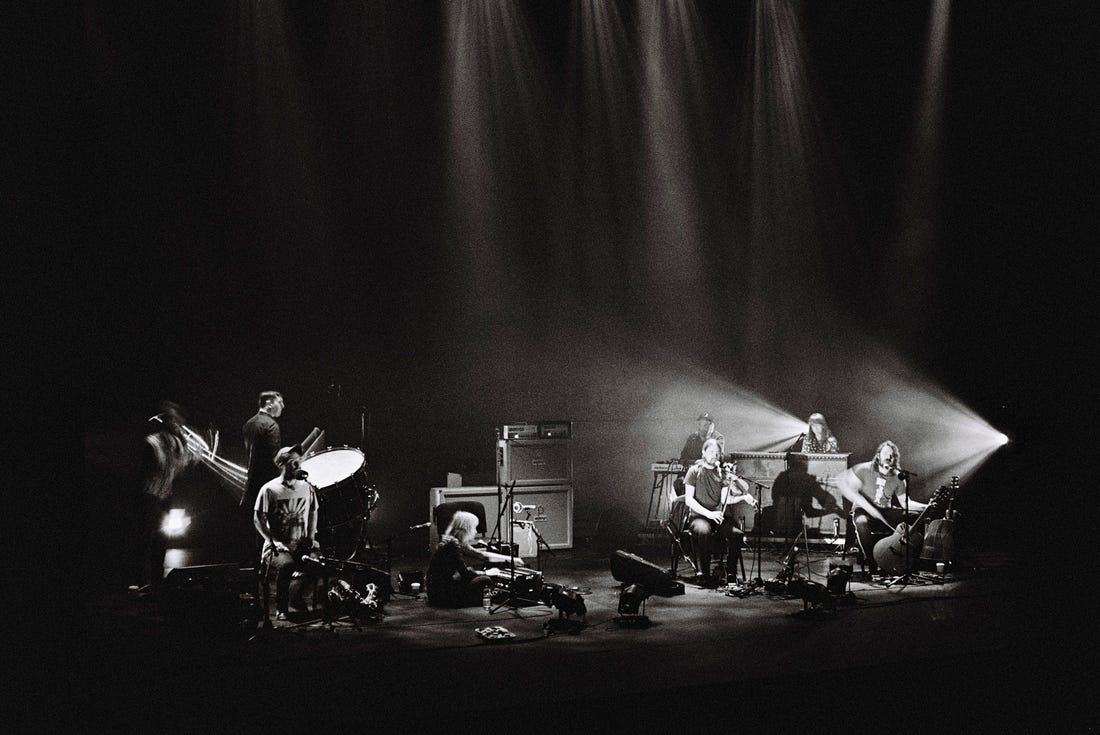
And so then the question – did they succeed? I have already made plain this album isn’t for everyone. But for me, it is a magnum opus, a musical achievement that anyone with more than a passing fancy for music should know. And so then the question can only be answered by you. In whatever way you choose to hear your music, give this album a listen, then listen again and realize you might need more than two or three listens to come to your conclusion. Understand this, False Lankum opens new pathways in your musical brain, and it may take several listens before the construction is complete.