

When you’re knee-deep in the middle of a scene, do you have any idea how underground it is? Goth subculture in the early to mid-1990s was deeply underground. Bands like The Sisters of Mercy, The Mission and Fields of the Nephilim — staunchly second wave — had peaked and were on something of a hiatus, while third wave acts like Switchblade Symphony, London After Midnight and Black Tape for a Blue Girl hadn’t yet found their voice. Long gone were the first wave acts — Bauhaus, Joy Division — with The Cure having crossed over and found a bit of mainstream success.
One act ran through all the different goth eras and found a home in each: The Cramps. Steeped in B-movie horror, sporting leather, latex and vinyl on stage and singing songs about doing things on your terms, they were like your crazy cousin who found their way into everything — endearing and missing the mark, but not enough that you didn’t claim him as your own. This was the band who reveled in who they were and didn’t give a damn what anyone else thought of them. It was in the San Diego goth subculture where I found them.
San Diego doesn’t get the credit it deserves for the thriving goth scene it supported during that era, with legendary DJs like Bryan Pollard nearly sustaining it himself, operating at one time three separate clubs.
In my mind, two clubs were the heart and soul of the San Diego goth scene during the mid-90s. Friday night belonged to the 21-and-over crowd, to Bryan, and to Therapy in the Midway District, across the street from both the Sports Arena and Tower Records. For those unable to partake in adult libations, Thursday night belonged to you at Soil, off of Hancock Street, in a building that doesn’t exist anymore. Both were extraordinary venues with DJs insanely knowledgeable about the music and what the scene wanted. A bit more tucked away on what was then the fringe of the city, Soil was the spot where the rules absolutely went out the window, and I think I witnessed or partook in nearly every goth stereotype you’ve ever imagined.
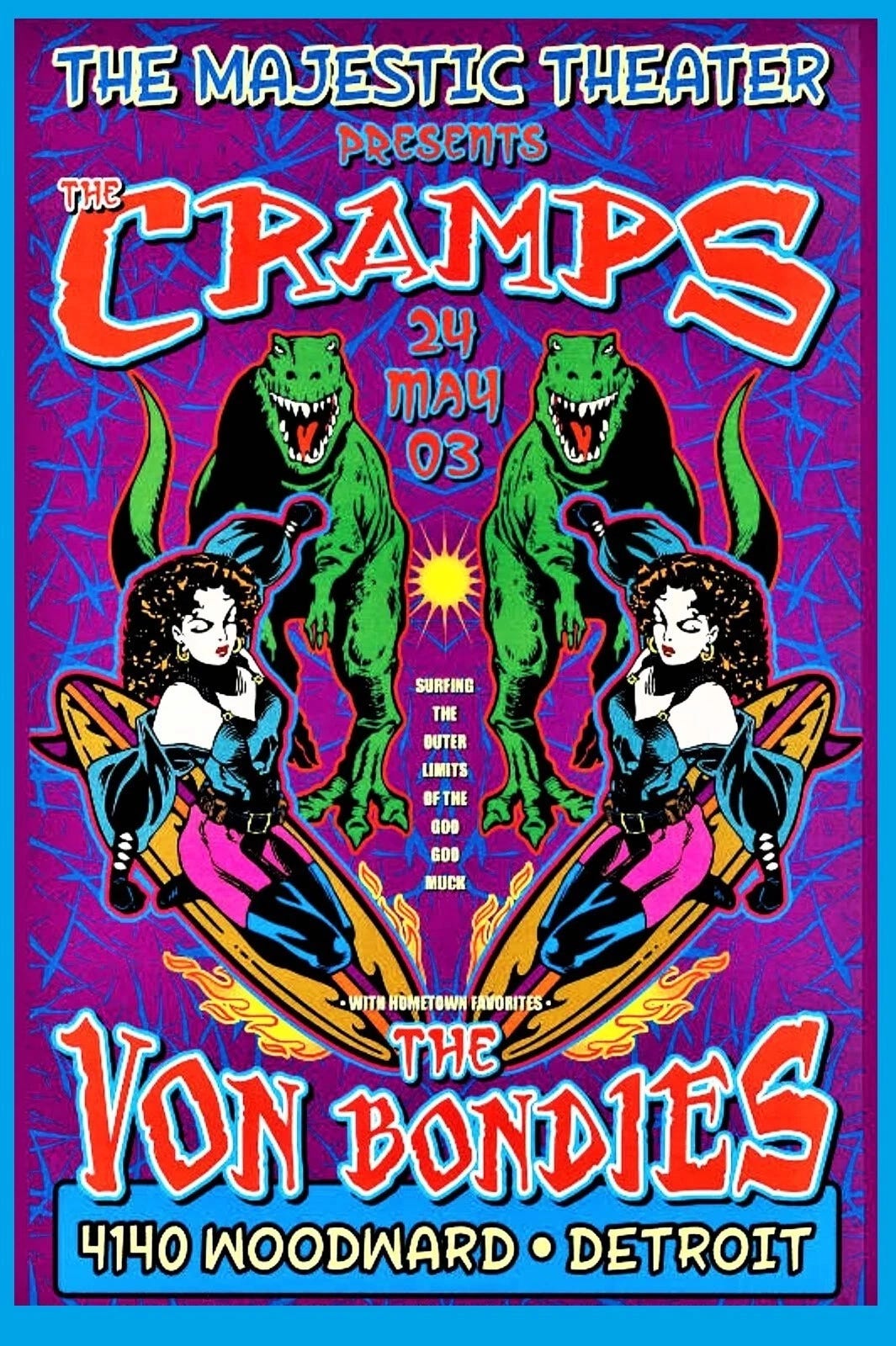
It was at one of Bryan’s clubs that I was formally introduced to The Cramps. Less than two years in California and turning 21, Therapy was the club I was chomping at the bit to get into. I’d already made a few drive-bys, checking out the scene, the people, and was locked in as soon as the moment arrived. I didn’t have to wait long — I turned 21 on a Thursday, and the next night I was standing in line to get in the doors. As soon as I walked in, I knew I was home.
Always early to everything, I grabbed a drink from the bar, found a nice dark corner and settled in to watch the night unfold. My whole world was about to be rocked when, over the speaker, came the staccato walk down the fretboard introduction to “Human Fly,” with a dirty, nasty, made-you-feel-things-in-regions-of-your-body-you-didn’t-talk-about guitar fuzz, as Lux Interior came in and suddenly I was a human fly.
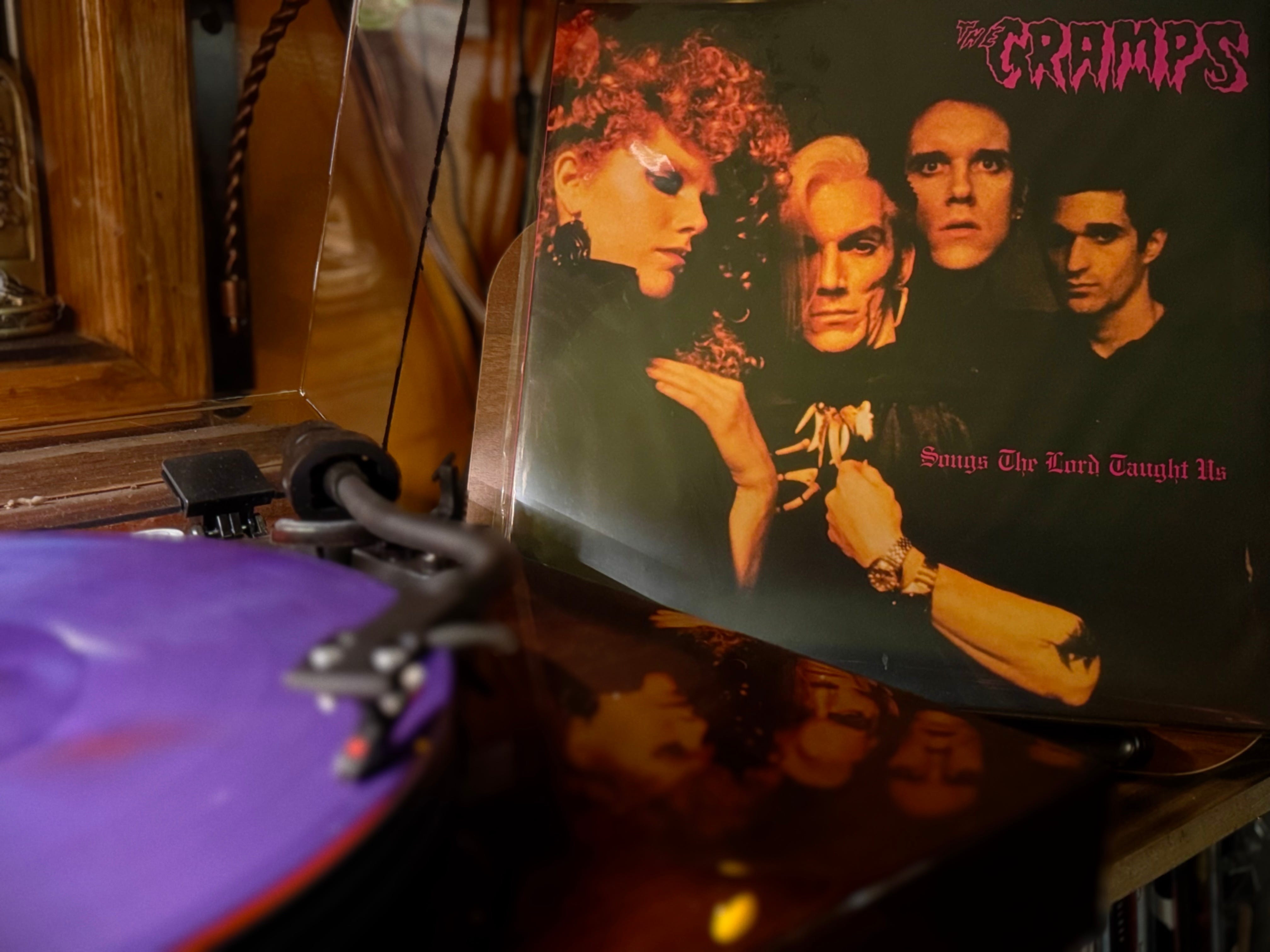
It would be some time still before I made friends with Bryan and we began our regular Saturday excursions to Off the Record in Hillcrest for new music acquisitions and lunch at Hamburger Mary’s. Don’t ask me which trip it was — there were far too many — but on one of those trips I finally picked up Psychedelic Jungle/Gravest Hits and Songs the Lord Taught Us. Immediately I ripped the cellophane off the CD and popped it into my car’s player, skipping to “Human Fly” and feeling an immediate sense of chaotic neutral cool as I made my way along the 5 back to Oceanside. I’d been a die-hard Cramps fan since that club, since those moments with Bryan. But something funny happened along the way.
You ever meet someone and can’t shake the feeling you’ve met them before? A face in the crowd imprinted even if not remembered. Popping Songs the Lord Taught Us into the CD player, a vision flitted by as “Garbage Man” filled my apartment. I’ve heard this before… where… why didn’t it stick?
All these years later, while I maintain I’d heard it before, I still couldn’t tell you where. But it did the work. Slowly, Songs the Lord Taught Us found its way into my player more often than any other Cramps record, and I had most of them.
Where do you start with an album like Songs the Lord Taught Us? Recorded in Memphis, Tenn., under the watchful eye of Alex Chilton at Phillips Recording, the album was released to an unsuspecting public in 1980. This was a band who had cut their teeth in the gritty punk scene of New York City, regulars at CBGB, while planting seeds for future music icons when they performed at the DC-based LBJ Restaurant & Lounge, known to the locals as the LBJ Club. Lux and Ivy knew what they were doing, deciding the birthplace of their musical foundations had to be where they recorded their first studio album. It was pilgrimage as much as recording session, the band wanting the album to continue that earlier sonic heritage.
That LBJ Club show is worth a beat on its own. In April 1979, two teenagers stood in that crowd and walked out changed — Ian MacKaye and Henry Garfield, who’d soon rename himself Rollins. MacKaye went on to form Teen Idles, then Minor Threat. Rollins formed State of Alert before becoming the longest-tenured singer of Black Flag. An entire branch of American hardcore traces back, at least in part, to one small room and one band willing to play it.

In an album of amazing songs, perhaps the most informative is “Sunglasses After Dark” — a manifesto of sorts, laying bare everything the band was about. Lux’s frantic lyrics tell you how to embrace coolness and non-conformity, and the risks inherent in that decision — finding himself in a night fight where everyone gets stabbed because no one could see through their sunglasses. The driving force of the piece, as with most Cramps songs, is the playing of Ivy.
Let’s full stop here for a moment. Ivy has never received the credit she is due. Without question, she is the Queen of Rock and Roll.
Ivy’s playing channels Link Wray’s own 1966 instrumental “Ace of Spades” — no relation to the Motörhead song most people know by that title; Wray got there first by over a decade — reworked here for the Dwight Pullen original. The frenetic energy of the opening gives way to a building feedback loop that resolves into the engine of a muscle car primed for danger, allowing Lux to explode into his lyrics.
And then there is the horror schlock of “TV Set,” the song that opens the album and isn’t exactly what it seems. On a critical level, the song serves as a critique of media’s influence on perception, and the unhealthy fixations it leads to. But to the goth and punk kids who absorbed the horror movie imagery of the song, and of the band as a whole, it was custom-built as a love song to their gothic partner. “Human Fly” may have gotten them onto the dance floor, but “TV Set” was the song they put on a mixtape for their lovers. The song is drenched in a cornucopia of surf rock guitar influences, ranging from Duane Eddy to The Ventures, Ike Turner back to Link Wray. Ivy’s playing on the album does what it always did best — makes the guitar mew, buzz, and weep — though no record exists of her ever putting it in exactly those words.
Ivy often returned to the sound of Link Wray, wrapping his influence into her own voice. But on “I Was a Teenage Werewolf,” her voice becomes clearest in its affection, the opening sequence being as near a reproduction of “Rumble” as one can get while avoiding the lawsuits. This track, above all others, claims direct lineage from Wray — Ivy’s playing stating emphatically: we are this music’s children.
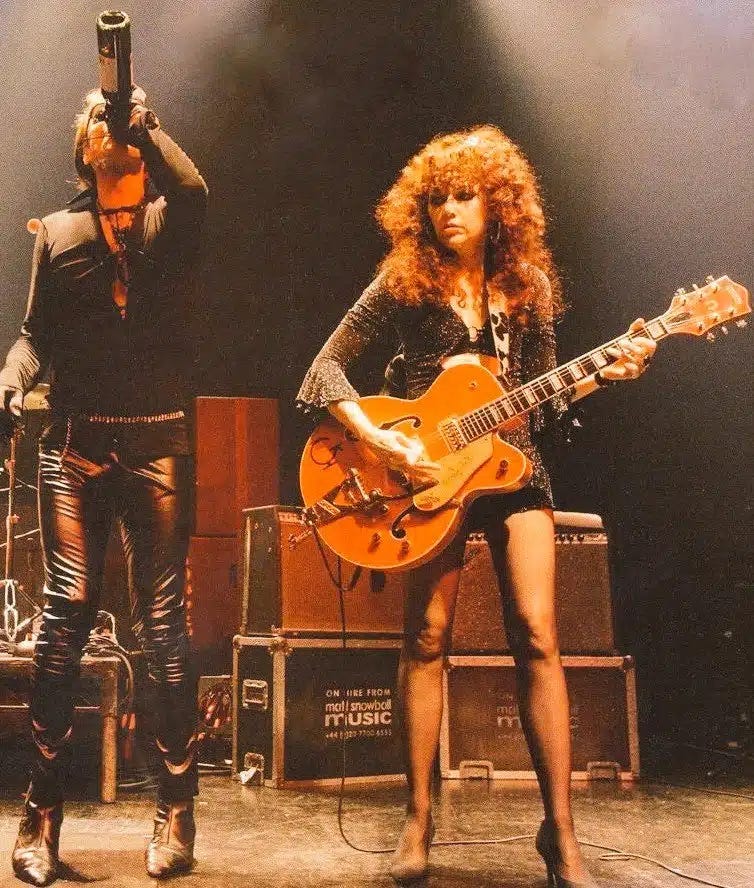
If “Sunglasses After Dark” was the manifesto and “TV Set” was the love letter, “I Was a Teenage Werewolf” was the armor. Ivy opens the track the same way she opens half the album — with Link Wray’s ghost in her fingers, that fuzzed-out riff announcing menace and cool before Lux has said a single word. Then he does: an outsider, a transformation, something monstrous living just under the skin. But it’s not the verses that did the work on the kids who absorbed this record into their identity. It’s the line he keeps coming back to, over and over, like he’s daring you to argue — no one could make me stop. Not a complaint about being misunderstood. A threat. A promise. For every disaffected teenager who’d wrapped themselves in black and got shoved into a locker for it, that line wasn’t a lyric. It was a posture you could put on along with the eyeliner — something to wear into a room that had already decided who you were and dared you to prove them wrong.
That was the heart of The Cramps, once you stripped away all the horror movie posturing. At their center, Lux and Ivy were two outsiders who leaned into who they were, what they loved, and told the world to go fuck itself in the process — inviting anyone willing to listen, to hear them, to join them. That was a message received loud and clear by generations of teens who thought no one understood them.
Nearly 50 years later, Songs the Lord Taught Us still feels every bit as essential as it was when released in 1980. Steeped in American musical roots, its power remains in the combination of channeling something as raw and electric as early American rock with lyrics accessible via horror movie, hypersexual window dressing that, upon deeper reflection, reveal themes of objectification, alienation, loneliness, and how to survive all of it as exactly who you are.
Lux died suddenly in 2009. The band folded, lacking a full half of the power couple that made it. Ivy retreated from the public eye entirely. But that is not the end of the story. In a truly amazing twist of fate, through her friendship with Henry Rollins, a series of tapes from the band’s original 1977 recording session at Ardent Studios have been unearthed. Living a third life as music historian, Rollins has worked alongside Ian MacKaye to restore the originals, edit, mix and cut the lacquers for what will be Gravest Gravy, dropping this August. As if that’s not enough, the release is the first of what’s expected to be several from the newly reformed Vengeance Records — the Cramps’ own imprint — with Ivy as the head of The Cramps Inc. 2026 is shaping up to be the year a whole new generation of kids get cramped.
If this found you, subscribe free to Playin’ in a Traveling Band.