

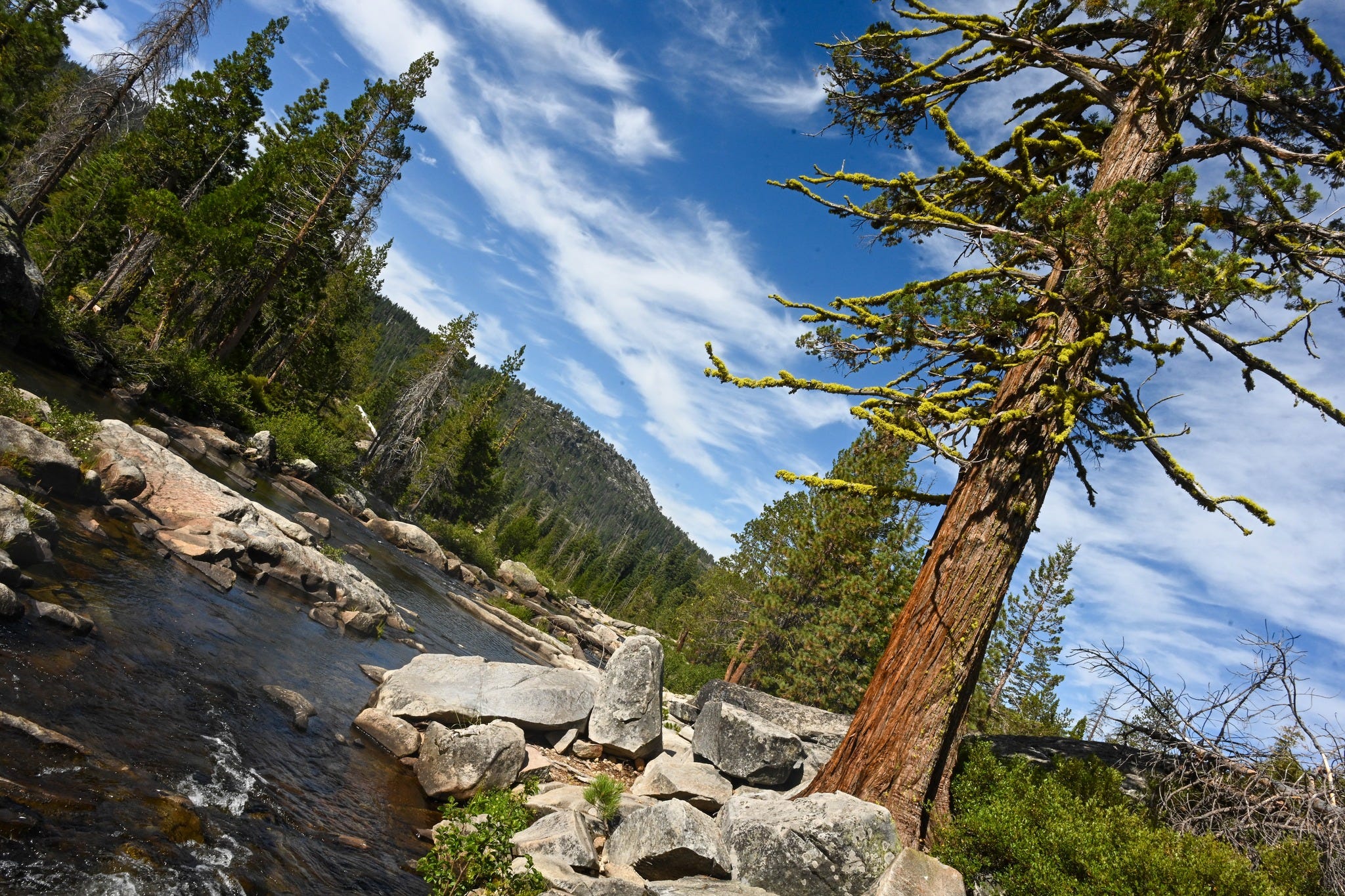
Van life was my aspiration long before it was a hashtag. Growing up GenX in rural Fairbanks, Alaska with no social media to numb me, I often found myself daydreaming during the crushingly cold, crushingly dark, crushingly long winters. Waves of warm beaches flooded my imagination as I careened up the California coast, adventure, mischief, women and parties. As a lonely teenager with loads of time at hand, amongst others, I devoured Jack Kerouac’s “On the Road.” My vision was set – the lower 48 with nothing but miles of open road, copious amounts of alcohol, the occasional fellow traveler or hitchhiker to keep me company and the ambition to consume it all as it consumed me.
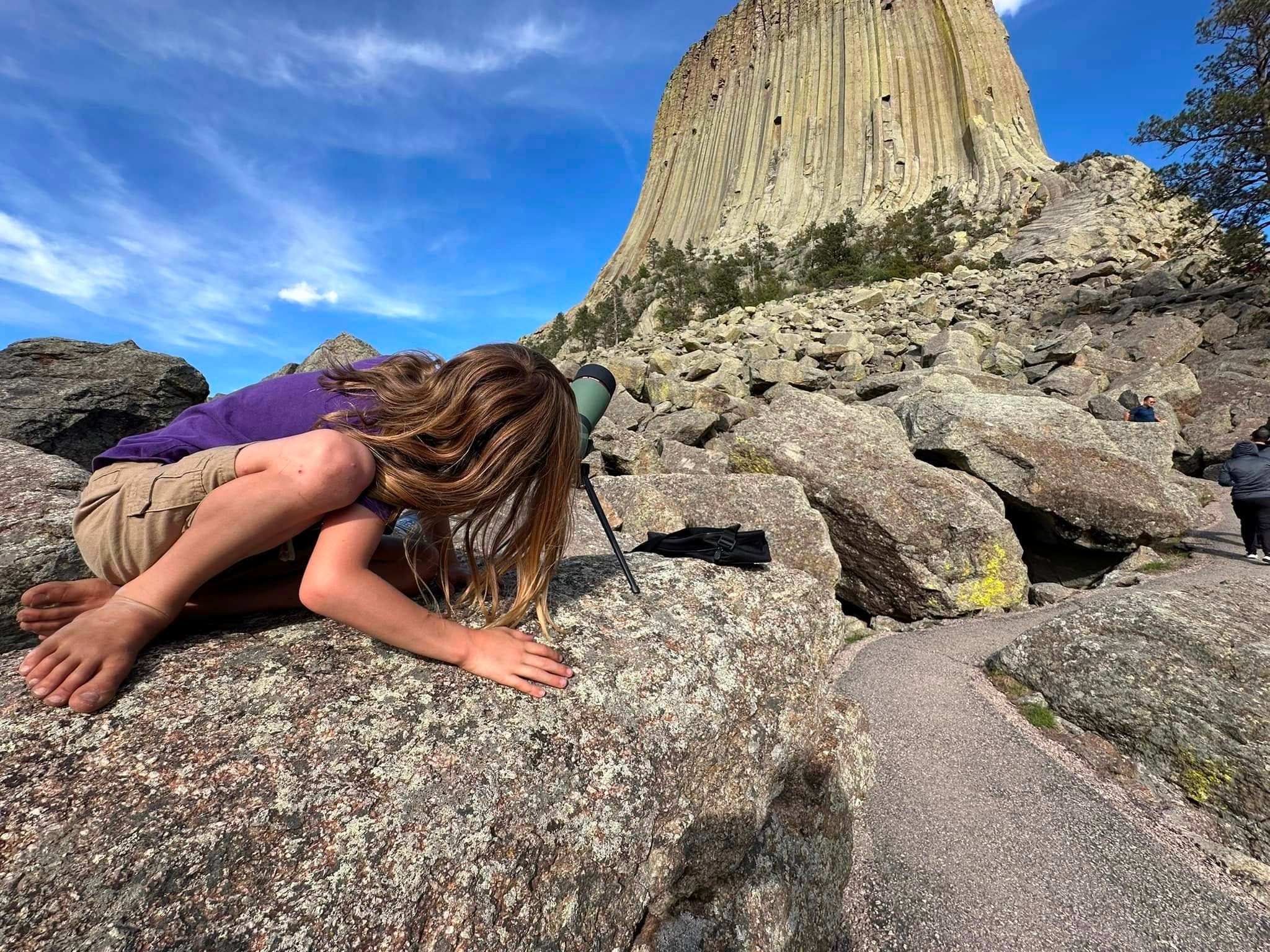
At the center of my dreams was the nation’s National Parks. A life spent scratching the surface of Denali when grandparents or friends visited. Yellowstone during a cross-country family road trip from New Jersey to Fairbanks to experience the geological wonders as we stood by faithfully. A sojourn to Mount Rushmore travelling to family in Kansas and a too-quick sprint through Yosemite instilled in me a yearning to see and learn more of our nation’s treasures. They were a roadmap across the nation, filled with additionally interesting pitstops along the way, soulmates on similar pathways and they were mine for the taking.
And so it was at the age of 18 filled with desperation to escape Alaska and an aching to live a Dean Moriarty life with a dash of Japhy Ryder (different book, same author), I did the only thing a young man of the time with such intense yearning and meager means could – I joined the Marines
.
Lust of the wondering variety is in no way exclusive to me nor is centering the nation’s public lands in those fever dreams. A November 2025 report by the Outdoor Recreation Roundtable estimates recreation activities on the Nation’s Public Lands generate an estimated $350 million dollars per day in revenue for federal, local and community coffers. (Peterson) That’s $71.8 billion per year spread across 640 million acres of no drill, baby … no drill.
“Starting with $72 billion in direct annual spending by recreational visitors to federal public lands, these dollars then support over 900,000 jobs, nearly $6 billion in federal tax revenues, and $128 billion in economic activity, among other positive impacts,” (Peterson).
While a massive revenue generator for federal coffers and local economies alike, recreation on public lands is just one piece of a much bigger puzzle. Along with biking, hiking, and camping, the nation’s public lands provide timber, minerals, and other natural resources sold as commodities. It should be noted here, in both recreation and commodities, the exact numbers are not typically straight forward making a direct comparison across uses difficult at best. As one such example, service contracts for timber harvest involve in-kind contributions such as repair to roads that doesn’t figure into the total value of the timber sold. Wildfires that have ravaged the American West in recent years producing thousands of acres of burnt timber – that timber is typically removed in a salvage sale meaning the agency typically pays someone to remove it (a loss in the final accounting in dollars but a plus in the million board feet produced). According to Carl Ross, executive director of Save America’s Forests, the Forest Service loses approximately one billion dollars a year on timber production. “We’re giving trees to timber companies at an economic loss to the American people,” (Averill). Likewise, with the exception of the National Park Services, the majority of nation’s public lands aren’t behind a fence and pay station making totaling exact visitor numbers a scientific guess at best.
In 2025, the United State Geological Survey released 58-page report detailing the differences and methodologies the different land management agencies use to estimate – and I stress, estimate – the total number of recreation visitors. “…NPS reports visitation at the park-unit level (for example, one estimate for an entire park), and the BLM reports visitation at individual sites within each field office (for example, individual campgrounds, trailheads, access points)” (Hansen, 3). Differences in the unit visitors are measured on is just one example, the report goes on to note that while the Park Service is able to provide monthly user counts, agencies such as the Forest Service produce an estimate every five years further complicating an already difficult process - ” because counting the total number of visits to public lands and waters is an inherently challenging task, and almost all visitation data are estimates with some degree of uncertainty.” (Hansen, 3). How many licks does it take to get to the center of a tootsie pop? Or, in this case, how many people are visiting the nation’s public lands? The world may never know.
How did we get here? What collection of madmen created this seemingly constantly at-odds-with-itself system? To understand what can feel like a collection of schizophrenic policies, one must first understand a few basic guiding laws that, over time, have been layered upon themselves to the system we have today. The Genisis story of the nation’s public lands begins with the Antiquities Act of 1906. Like any true origin story, there were fits and starts previous to this act, but our story truly begins to take shape at this point. The act gave the President of the United States the ability to set aside federal lands “… to provide general legal protection of cultural and natural resources of historic or scientific interest,” (“Antiquities Act of 1906”). Since its passage, presidents have used the act more than 300 times to designate 160 National Monuments, typically the percussor to National Park status. Things mostly hummed along for decades as America went to war (twice with the world, and multiple engagements alone) came home and extracted resources from the nation’s public lands to keep pace with the needs of the nation. That resource extraction came at a price; degraded landscapes, clear cut forests and polluted waterways. As the nation’s view towards it public lands began to shift toward more environmental concerns, so did the laws governing their use.
In 1976, the United States Congress passed the Federal Land Policy and Management Act, amongst public lands nerds its known as FLPMA. At its core FPLMA tried to give more guidance to the three central agencies (the Forest Service, the National Park Service, and the Bureau of Land Management) charged with stewarding the nation’s Public Lands with a multiple-use, sustainable yield mandate. ‘Multiple use’ is defined in the Act as “management of the public lands and their various resource values so that they are utilized in the combination that will best meet the present and future needs of the American people.”
Coming on the heels of many an environmentally focused law (the National Environmental Policy Act of 1968, the Clean Water Act of 1970, the Clean Air Act of 1970 and the Endangered Species Act of 1973), FLPMA was a response to a public whose conscience was shifting toward environmental concerns. As noted by Jan Laitos in “Recreation Wars for Our Natural Resources” this environmental conscious represented a second, discernable phase in the nation’s attitude toward its greatest idea. The first phase, roughly 1862 – 1964 was wholesale exploitation as government men pushed commodity developers to search for and remove valuable resources. The absolute mess this created shifted public opinion and stirred the rare congressional action as public lands entered a second phase, 1964-1990 which “looked to reconcile extractive commodity demands with popular environmental value, such as preventing the depletion of natural resources, maintaining clean air and water, and preserving landscapes and endangered species” (Laitos, 1092). And now, Laitos argues, we have entered a third phase moving from environmental protection to preservation and recreation.
As Schulz puts it, gerrymandering for the extractive industries.
And yet, much like the dinosaurs whose remains they extract in the form of oil, the troglodytes from the first era are rearing their ugly heads, extending their greedy paws into our current era. Such was the case when President Trump, during his first administration, reduced the size of the President Clinton designated National Monument Grand Staircase Escalante. New Yorker magazine columnist, Kathryn Schulz tackled this in her article “Food Fight” noting the peculiarity in Trump’s decision. Ostensibly a story about two women running a successful restaurant in the town of Boulder, Utah, Schulz narrows her focus until we are finally overturning the stones troglodytes hide under. As Schulz details, the monument wasn’t only reduced in size, it was carved up into three separate landscapes: Grand Staircase, Kaiparowits and Escalante Canyons. While seemingly nonsensical at first, “The logic governing those boundaries became clear this summer, when the Department of the Interior accidentally released a report that contained extensive information—redacted in a subsequent version—on the whereabouts, within the original monument, of oil, gas, coal, tar sands, copper, cobalt, uranium, and other natural resources” (Schulz). As Schulz puts it, gerrymandering for the extractive industries.
Who are the nation’s public lands for? Who should benefit from all that is contained within the boundaries of a National Forest, a National Park or a Recreation Area? Should priority be given to the benefit of the millions of visitors each year or to the corporate, extractive industries? Funding for public lands comes in the form of annual Congressional appropriations – should not that funding be directed at the use most beneficial to the most Americans? It’s a popular misconception that revenue generated by a public lands unit (a forest, a park) stays on that unit. That is simply not true, in most cases, money generated by public lands goes to the U.S. Treasury and is absorbed into the nation’s general funds. In a letter to Congress reflecting on National Park designations, famed American author Wallace Stegner wrote, “National parks are the best idea we ever had. Absolutely American, absolutely democratic, they reflect us at our best rather than our worst.” But is our worst winning out? Are decision concerning public lands being slanted in favor of the monied few? Should money factor into this at all?
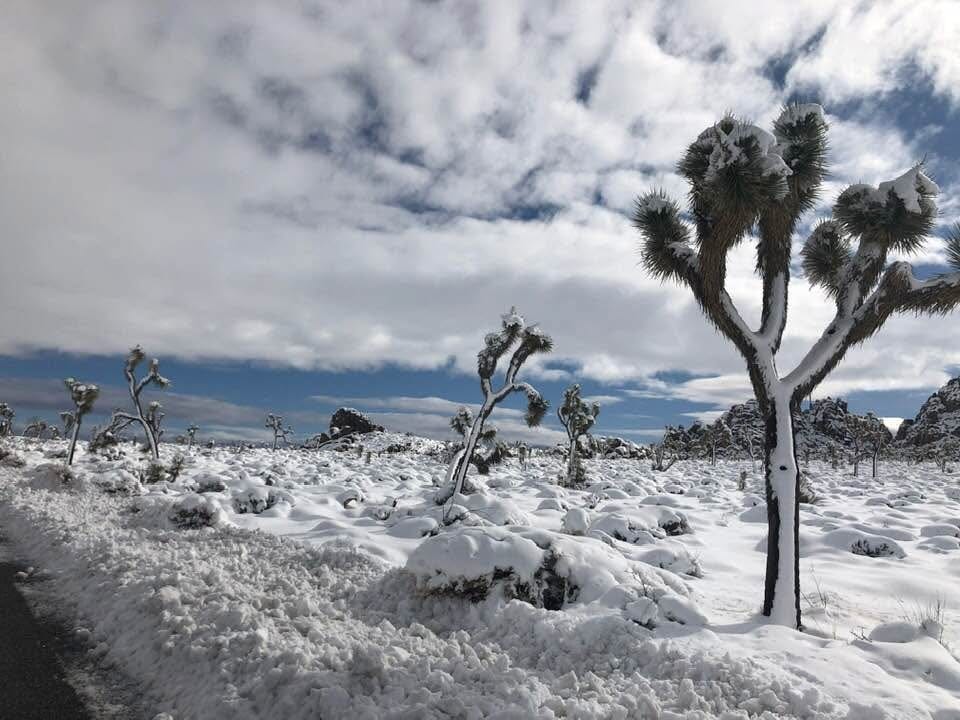
There’s nearly 30 years between the time I joined the Marine Corps (1993) and when I began working for a federal land management agency starting with the Bureau of Land Management in 2019 to the Forest Service in 2021 where I find myself today. My youthful desires to blaze a path in the footsteps of Jack Kerouac and Ed Abbey and that generations of writers are now tempered by the natural maturity of aging and the deeper readings of more contemplative writers such as Wallace Stegner, John Steinbeck, and Aldo Leopold. In those years between I followed that young dream -- I’ve driven from the east coast of our nation to the west coast nine times, more trips along north/south axis than I can count, from Alaska to the lower-48, three times. I’ve visited parks, camped on National Forests, walked across the causeways of Bureau of Reclamation damns, and watched river otters frolic on U.S. Fish and Wildlife Natural Preserves. My journeys continue to this day, the only end in sight coming in the form of a pine box.
Who are the nation’s public lands for? They are for us. They are the American citizen’s birthright and inheritance and that is enough, no value need be ascribed. Writing a letter of support during the development of the Wilderness Act of 1964, Stegner captured the essence of the nation’s public land arguing they were our soul and needed far more for what they represented than the value they contained. “It is good for us when we are young, because of the incomparable sanity it can bring briefly, as vacation and rest, into our insane lives. It is important to us when we are old simply because it is there--important, that is, simply as an idea,” (Stegner). When considering the public lands of the United States, the question that needs asked – is the nation’s soul for sale?
Works Cited
“Antiquities Act of 1906.” National Parks Service, U.S. Department of the Interior, www.nps.gov/subjects/archeology/antiquities-act.htm. Accessed 13 Dec. 2025.
Averill, Graham. “Logging vs. Recreation.” Blue Ridge Outdoors Magazine, 18 May 2011, www.blueridgeoutdoors.com/magazine/july-2008/logging-vs-recreation/#:~:text=The%20Forest%20Service%20loses%20%241,year%20to%20the%20U.S.%20economy.&text=3%25%20of%20all%20jobs%20are%20related%20to%20logging.
Hanson, Dieta, et al. “Monitoring Recreation on Federally Managed Lands and Waters-Visitation Estimation.” Scientific Investigations Report, 1 May 2025, pubs.usgs.gov/publication/sir20255022.
Peterson, Christine. “Federal Public-Land Recreation Generates $350M Daily, Creates More Jobs than Logging and Mining Combined.” Outdoor Life, Outdoor Life, 14 Nov. 2025, www.outdoorlife.com/conservation/report-value-federal-public-lands/.
Schulz, Kathryn. “Why Two Chefs in Small-Town Utah Are Battling President Trump.” The New Yorker, 24 Sept. 2018, www.newyorker.com/magazine/2018/10/01/why-two-chefs-in-small-town-utah-decided-to-sue-president-trump.
Stegner, Wallace. “The Wilderness Letter: An Excerpt.” Backpacker, vol. 26, no. 5, June 1998, p. 50. EBSCOhost, research.ebsco.com/linkprocessor/plink?id=33065371-85e9-3a13-b8f0-1abd9099809d.