

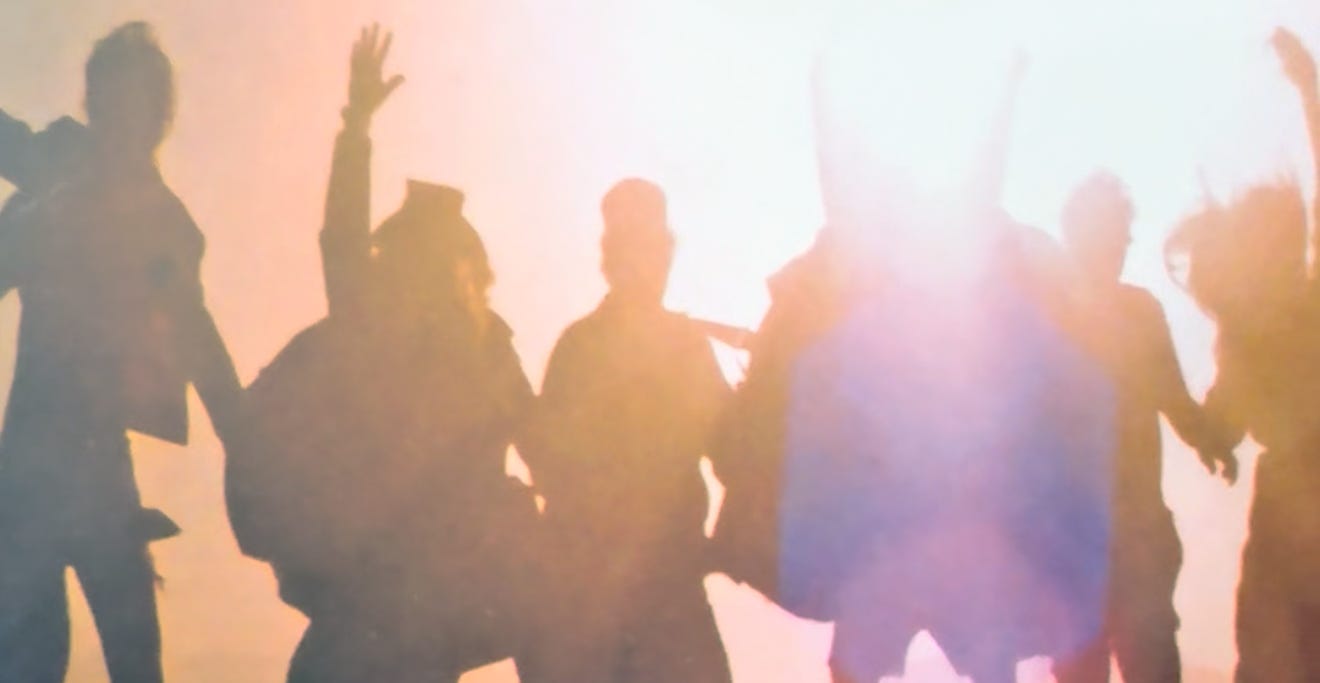
If Edward Sharpe and the Magnetic Zeros Up from Below were a movie it would be The Adventures of Buckaroo Banzai — gleefully weird and weirdly cheerful about it. A rotating cast of ten to thirteen musicians anchored by frontman Alex Ebert, the band released their debut album in 2009 drenched in analog warmth and the Laurel Canyon spirit of the 1960s.
But let’s back up a minute as perhaps we need a bit more context – you’ve never heard of Buckaroo Banzai you say, you’re forgiven and, well, I’m glad you asked. The movie centers on the efforts of one Dr. Buckaroo Banzai, a physicist, neurosurgeon, test pilot and rock star. To make a long story short, Banzai saves the world from inter-dimensional aliens and then goes on to play one helluva rock show. So … wonderfully weird, God-like figure saving the world, frontman in a rock and roll band … Check, check and CHECK!
Let’s get back to Edward Sharpe.
After years of the Los Angeles party life and subsequent drug addiction, Ebert, the then frontman of Ima Robot, broke up with his girlfriend, moved out of his house, and spent time in rehab. During this time he began writing a book about a messianic figure named Edward Sharpe who was “sent down to Earth to kinda heal and save mankind, but he kept getting distracted by girls and falling in love.”
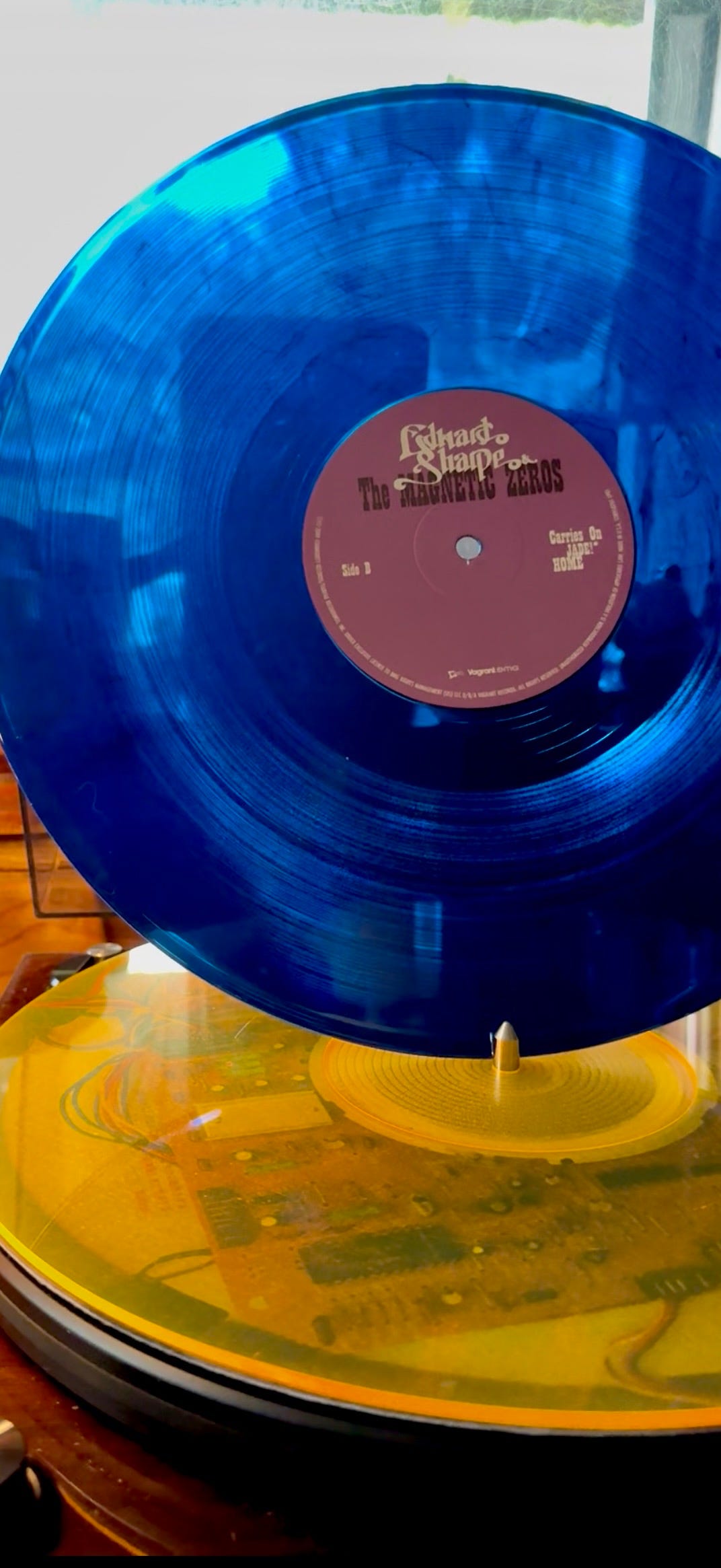
The nascent book eventually became lyrics as Ebert started assembling close friends. The foundation of the band began to take shape – what was one man’s vision of a worldly savior became a full-fledged desert choir singing hymns of brotherhood and devotion.
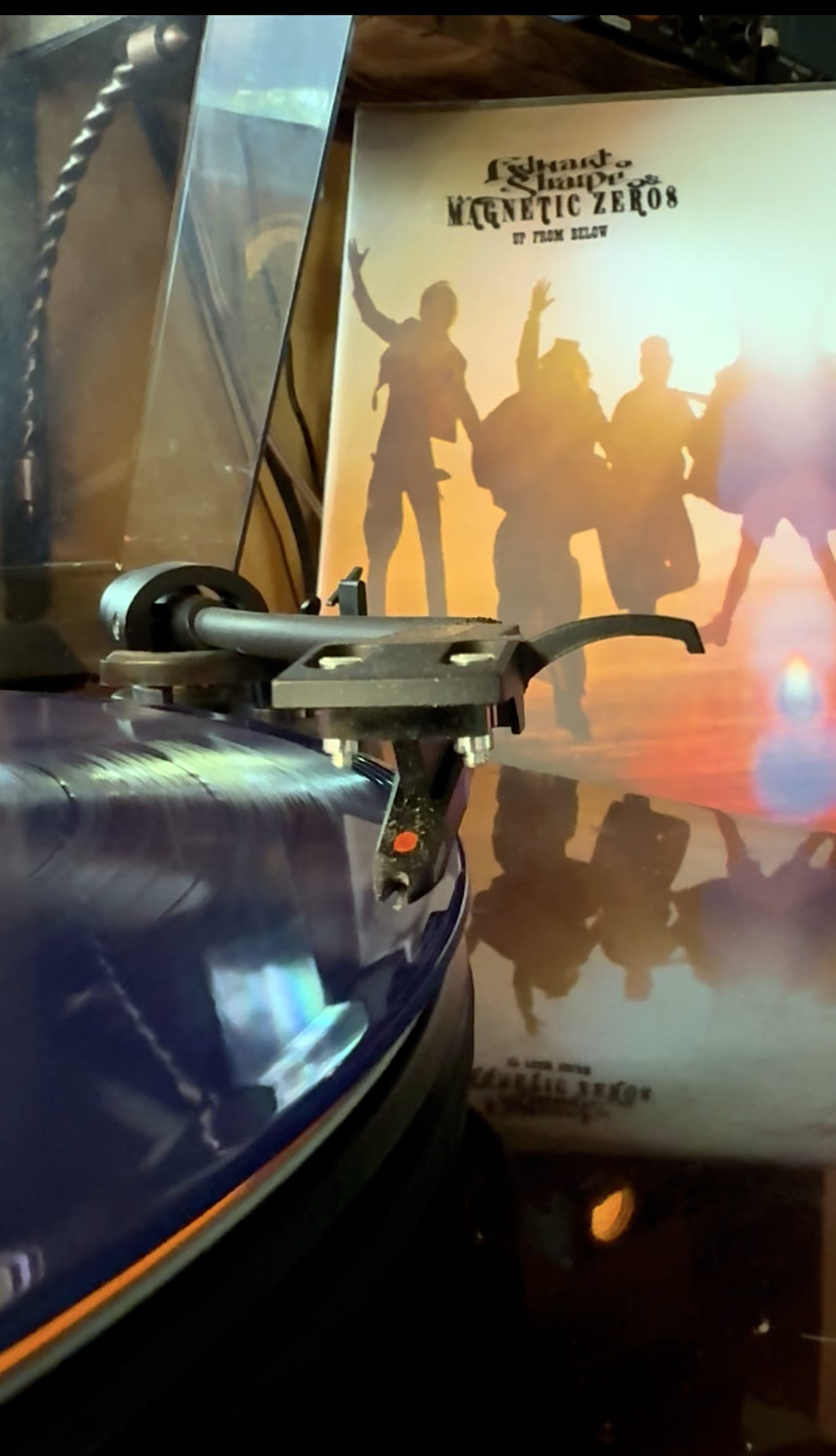
Drop the needle on “40 Day Dream”, the record’s opening track, and the hypnotic clack-clack-clack instantly draws you in as the sweeping orchestration takes over and suddenly you are under the spell of this band. In an interview with Jonk Music, guitarist Christian Letts talked about the recording sessions and the genuinely organic nature of the band’s process.
“It never felt like a grueling task,” Letts, who’s known Ebert since childhood, said. “This is a case of a group of people coming together at the right time. I don’t even think of it as a band, I think of it as a family.”
Every family has its heart. For Edward Sharpe, that heart had two chambers.
Buckaroo Banzai had Penny Priddy and Dr. Sidney “New Jersey” Zweibel; Ebert had Jade Castrinos and Heath Ledger.
This is one of those once upon a time in Hollywood type scripts. Ebert recounts seeing Castrinos across the street at a Starbucks and knowing immediately that he needed to have a relationship with her. Castrinos quipped they were both on their MacBook Pros, she looking at a L.L. Bean catalog. Whatever the circumstances, their relationship would become the emotional heartbeat of the album with their duet “Home” becoming not only the album’s signature track but also one of the most charming love songs ever written. And here is one of the few places I would quibble with the direction of this album. Home is track six on the album buried as a deep track. Carries On, which in my mind should be the exclamation point on “Home,” comes before it, sitting at track four. “Carries On” is a devotional of longing, a plea for love’s continuation that feels like the natural emotional aftermath of “Home.”
“Jade” is track five, the bridge of the trilogy. I would have rearranged these, Jade, Home, Carries On … the object of affection, the coming together, the deeper reflection, truly a hero’s journey of the classic Jungian framing. The couple eventually split, Castrinos left the band under difficult circumstances, and the song that sounds like the purest expression of love was written by two people whose relationship didn’t survive. Ebert later wrote a companion solo song called Truth, opening with “the truth is that I never shook my shadow.”
And then there’s Heath Ledger.
Around the same time that all this shit is going down with Ebert, Ledger had become involved in a project known as The Masses. Founded by Matt Amato and Jon Ramos in a Manhattan loft in 2002, the outfit moved to Hollywood in 2006, where Ledger got involved channeling money and energy into the project. But this wasn’t a company in any traditional sense, this was a creative commune. Ledger and his peers came together around a shared notion, taught each other how to shoot, light, and edit, plotted out music and record labels all in an effort to develop a little engine of creativity. And here’s the glue - Amato had already directed a music video for Ima Robot — Ebert’s previous band — meaning Ebert was already part of The Masses orbit before Edward Sharpe existed. When Ebert got sober and started building something new, he wasn’t walking into a stranger’s world. He was coming home to his people.
But it gets deeper.
In interviews, Ebert has revealed the band was to release their first album through The Masses, with Ledger advising them artistically — specifically telling them to stay true to their demos and not “re-record it better.” Ledger helped shaped the album's philosophy. He died in January 2008, the album came out in July 2009. He never heard it finished.
And deeper.
Ebert and Ledger had been developing a musical together, and Ebert has said they were talking about it in depth the night Ledger died — and that Ledger was genuinely excited about it. Ebert has said he still wants to finish it someday in Ledger’s memory.
I am an unabashed fan of this truly sublime album … the same cannot be said of subsequent Edward Sharpe releases. The magic just simply isn’t there. This wasn’t a case of catching lightning in a bottle -- this was planetary alignment. A man had to hit rock bottom and reinvent himself as a fictional messiah. He had to spot a woman on a street corner at exactly the right moment in both their lives. A Hollywood star had to decide to become an arts patron and then die before the music he helped fund ever came out. Twelve people had to pile into a Laurel Canyon house with a 1979 tape machine and play like they had nothing to lose. Mercury in retrograde indeed.
A gorgeous transportation into a world you love. Your passion for this music is a continuous exclamation point woven into the syntax of every sentence. Keep it up amigo!