

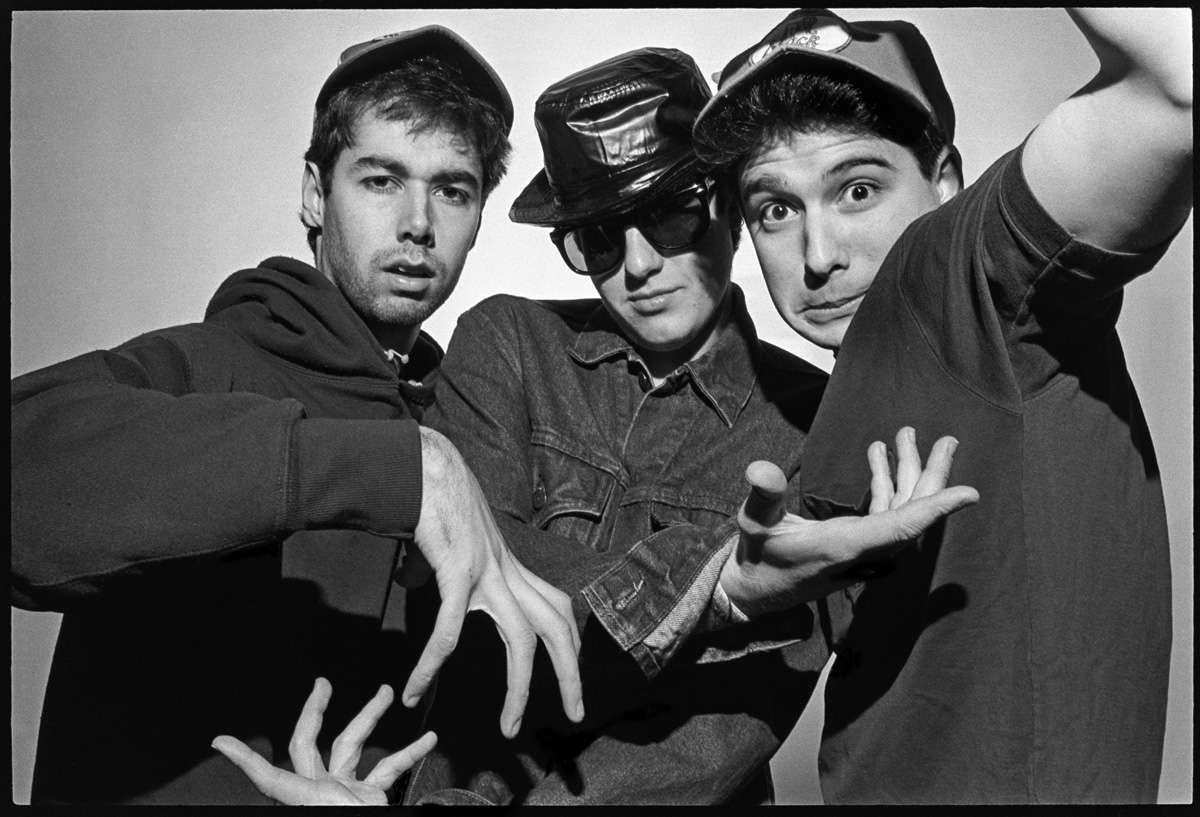
Slide a key into a lock. If you listen closely, you can hear the pins align, everything drops and with a gentle turn the metal shank pops, opening a new world. So it was around 1998, living in San Francisco — trip hop was the soundtrack of my life. Cool ass coffee houses into the late-night hours playing some DJ interpretation of a jazz standard put behind a beat. Portishead, Morcheeba, Massive Attack and Beastie Boys?
Given the Beastie Boys’ penchant for double entendres or outright name dropping, you can be forgiven for thinking The In Sound from Way Out’s opening track “Groove Holmes” was about a famous adult film star versus an ode to soul-jazz organist Richard Holmes. Clocking in at just over 38 minutes, the 1996 release compiled instrumentals scattered across previous albums. One of the most recognizable hip-hop acts in the world releasing a 38-minute instrumental jazz-funk record to their French fan club in 1996 wasn’t a detour. It was a reckoning. They were making a statement while asking a question — not to me, not to you, but to themselves.
To get to this record, you’ve got to go back — first to Paul’s Boutique, widely considered one of the group’s masterpieces, but that recognition exists only through the lens of history. When first released in 1989, the Boys were working hard to shed the reputation they’d earned with Licensed to Ill, but the album initially landed with a thud. On their first move to prove themselves as serious artists, they flopped — talk about a hit to the ego. But no matter, they plowed ahead with 1992’s Check Your Head and everything starts to change with the introduction of a carpenter who moonlighted as a keyboardist.
Mark Ramos Nishita wasn’t a professional musician when the Beasties’ engineer Mario Caldato Jr. introduced him to the band. He worked with hammer and nails, miter saws and levels, his keyboard an afterthought in a life as far removed from the touring schedule of a professional hip-hop act as one could possibly be. Nishita was also the most musically accomplished in a room filled with multi-platinum selling artists with a punk rock pedigree. Perhaps he made them remember something long forgotten: that before the turntables and the microphones, before Licensed to Ill made them famous for being obnoxious, they were musicians. It’s a question worth pondering, but whatever the answer, when Money Mark walked through the studio door during the production of Check Your Head a rocket-launch countdown sequence began that would catapult the band from snot-nosed rappers to artists with something to say.
If you’ve ever spent any time learning an instrument there are two things you know with absolute certainty: it sucks and you suck, at least for a very long time. These three white, Jewish kids from New York weren’t starting from scratch but the calluses had most certainly been lost. But why? Why bother walking around with sore fingertips and frustration when you’re already selling millions of records? Eminem doesn’t play anything and he does just fine. As with most things Beastie, the past is prelude. Remember, this was a hardcore punk band before they were a hip-hop act. Punk demands authenticity — it’s a genre that can smell a fake a mile away and root it out like a terrier on the hunt. All of the Beasties’ commercial success amplified this tension — on some level, they were frauds and they knew it. Playing instruments — actually playing, actually being musicians in the traditional sense — was partly about earning something that no amount of zeros in a bank account would ever give them.
The hard work starts to pay off with Check Your Head, nine instrumentals making the cut. But this is the band trying things on, finding their way, learning their chops. As they move to Ill Communication the progress is noticeable — there’s a movement afoot that any serious listener starts to feel but can’t exactly put a finger on. Between these two records there’s an incredible amount of touring and the Beastie Boys are well known as serious crate-diggers, going deep into the far corners of record stores and sounds to source their samples and now their homework. Take, as example, their deep dive for inspiration into Miles Davis’ On the Corner and Agharta — often considered two of Davis’ most abrasive, most uncompromising records in the canon. You can hear the influence directly in “Bobo on the Corner”, its wah-wah grooves reaching back to Davis like a student acknowledging his teacher. These were suddenly serious musicians doing serious work.
Perhaps the greatest disconnect between the casual music listener and the one whose soul is moved by sound is the oneness of music and spirituality. It’s no accident that as the Beastie Boys were deepening their connection to their instruments individually, the music holistically, that something would shift in their philosophy and spirituality. If Money Mark had slowly become the band’s musical center, pushing them forward into, for them, uncharted waters, then MCA — with his move away from Judaism to Buddhism — would become the band’s spiritual center. Apology without actions is just words, so while the Beasties began acknowledging their past sins, saying the words, they also began the work of atonement. Gone from their lyrics was the misogyny and the locker room humor. By the time Ill Communication released, MCA was rapping about Buddhist ethics on “Bodhisattva Vow.” But to bring their new worldview into hyper focus, Ad-Rock’s direct public acknowledgment in “Sure Shot” that the disrespect to women in their early work was over — stated plainly and without apology — landed like a manifesto. Ideology firmly established, the band only had one thing left to complete in this chapter of their journey — prove to themselves they were every bit the musicians they thought they were — and thus The In Sound from Way Out was born.
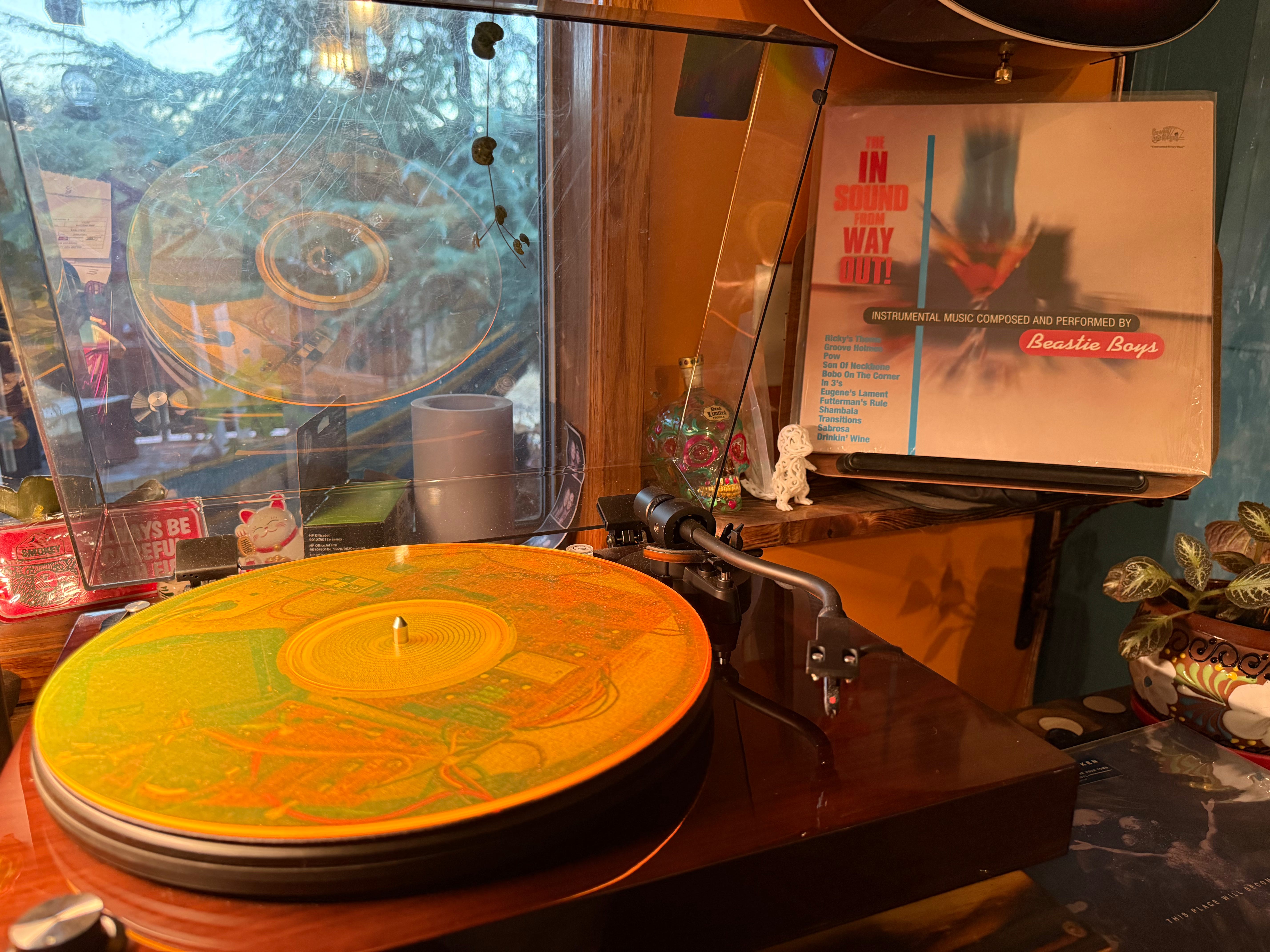
Art is a funny thing. More often than not, we consume an artist’s work one piece at a time, assigning meaning, making judgments, inferring intentions. Take the work of street artist and the world’s best hide and seek player, Banksy. Anyone familiar with his work knows the Girl with Balloon, Kissing Coppers, or Pulp Fiction and in the context of stand-alone pieces, most of us have our opinions. It’s not until an artist’s work is brought together, curated and presented as a whole that we start to grasp the artist’s full worldview, the bigger picture. The In Sound from Way Out is the bigger picture — the gallery showing that lays bare a new worldview. Thirteen tracks, some reworked, things subtracted, things added, some left to stand on their own — proving as much to themselves as to anyone that the Beastie Boys, accomplished musicians, had something meaningful to say.
I often come across as dismissive of the casual listener. I assure you that is not my intention. I do fear the casual listener may be unwilling to do the work needed to truly appreciate this album. This is a record that needs you to sit with it, to give it your undivided attention and be willing to do at least some of the hard work required to appreciate all the lesser-traveled roads the Beasties covered. Consider “Eugene’s Lament”. Named for Eugene McDaniels — the R&B cult hero who wrote Compared to What, one of the most politically charged jazz recordings of the 1960s. Three men who built their career on samples choosing to name an instrumental after the man whose music they’d been drawing from. That’s not a production credit. That’s an acknowledgment of lineage. That’s saying this is where we come from and we know it. That is the something the casual listener will miss with a passivity that only hears “Fight for Your Right.”
I don’t think there’s a music critic or writer worth their salt who hasn’t been accused of being a snob or an elitist. And here’s the rub when it comes to the Beastie Boys — that knife cuts both ways. The casual listener wanted more Licensed to Ill while the serious listener was dismissing them as juvenile pranksters. The accusation of snobbery and the accusation of shallowness are the same failure of attention applied in opposite directions. Then Hello Nasty dropped with Intergalactic leading the charge and everyone’s world was rocked — the casual and the serious alike. Commercial enough to top the Billboard 200. Sophisticated enough to satisfy anyone who had been paying attention since Check Your Head. The private reckoning of The In Sound from Way Out made fully public.
Sitting in a San Francisco coffee shop in 1998, The In Sound from Way Out playing through my headphones and all of 24 years old, there was no way I could appreciate everything this album represented. It’s not a knock on the young to say that depth comes with experience, experience comes with age — I just didn’t have the depth in that moment. Nearly 30 years later, a life lived with richness and a seeking of experience, I’ve come to see this record for what it was. Three men at a pivot point in their lives. MCA was 31, Mike D was 30, Ad-Rock was 29. An authenticity ethos forged in the punk rock scene of 1980s New York City. Their credibility, to themselves, was the question. This album was the answer. Are we artists, are we musicians? Do we have something of meaning to say? The answer — unequivocally yes.

Really enjoyed this, Benjamin. The bit about Money Mark being a carpenter made me smile. Imagine turning up and being the best musician in a room full of Beastie Boys. I also loved how you came back to that coffee shop at the end. Funny how a record can stay the same while we hear it differently over the years. Happens to me, too, the older I get.