

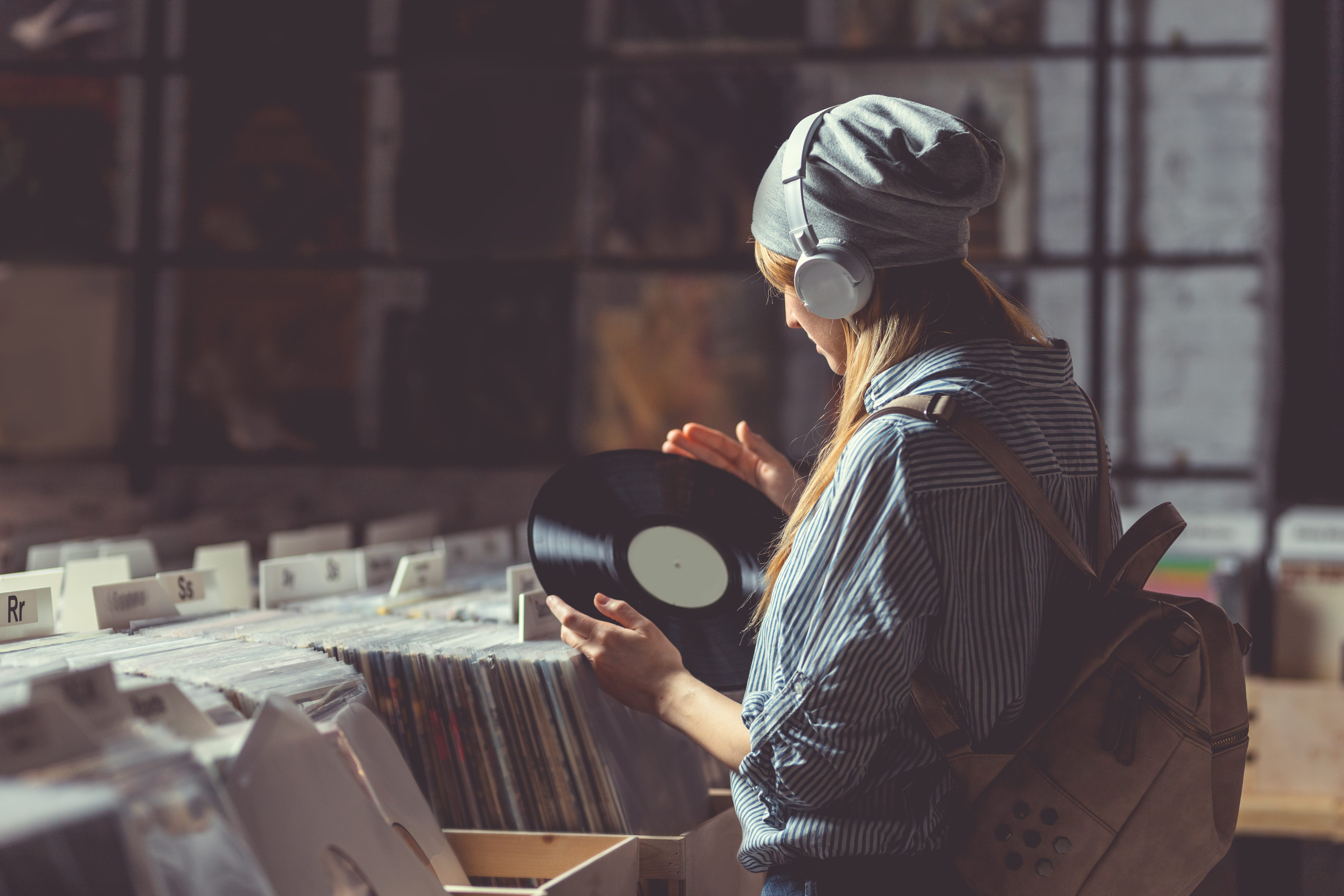
Who in their right mind puts “The Lemon Song” by Led Zeppelin on a mix tape for their eight year old son?
Oh wait, I gave the answer away already.
Well, no one ever accused my father of being in his right mind. Though he is left-handed. Appropriateness and the years it took me to fully understand exactly what in the world Robert Plant was singing about aside, a far more important seed was planted.
Like any seed, germination rates may vary and it took a hot minute before this one took root. But it took root solidly and this seed was transmission. There is a rather famous adage that goes “That which grows fast, withers as rapidly. That which grows slowly, endures.”
Which is why, near 50 years later and a lifetime of spending my last nickel to see shows both grand and hyper local, trading mix tapes, then CDs, then playlists with friends, young, emerging artists still occupy my turntable and fill my headphones.
Battery Operated Orchestra and Brigette Rose recently published a substack piece entitled Slave To The Algorithm: Why Working Class Musicians Are Giving Up On Being Heard. I highly encourage you to go read it and then come back to this piece. In the article, BOO talks about the myriad issues facing musicians as they work to gain traction in a world more and more defined by social media algorithms and virality versus talent. There’s not much in the article I disagree with. I do think BOO left a very important piece of the equation off the table, that of the music fan, the music consumer. BOO frames the question as such:
The question for listeners is: what kind of music culture do we want? One where discovery is orchestrated by marketing agencies and every trend is potentially manufactured? Where our favorite artists spend more time strategizing TikTok hooks than writing songs? Or one where we have a human to human connection which grows organically. It might be slow, but just as good lumber is grown slowly with its rings closely pressed together, it will be strong.
And herein is where I think a category error has emerged. As I read it, the question is posed to music listeners the world over. There is no distinction between the truly passionate, truly engaged music lover and the casual fan, the one who can’t list a single band when you ask them what they listen to and they blithely answer – Oh, a bit of everything. These are not the type of people who are going to drive more than 100 miles to see their favorite artist nor are they the ones willing to stand in line for several hours waiting for the record store to open so they can snag the newest release.
A few months ago I was standing outside Rock Cellar Records in Truckee, California. It was a record store day event and I had called ahead to get a sense of how early I needed to be there. The voice on the other line assured me that an hour or two early and I should be fine, so by 8 a.m. the next morning stadium chair in hand I pulled up in front of the store. Not hugely to my surprise there was already a line. I set up and began chatting with the folks ahead of me.
“What time did you two get here?” I asked the two young ladies in front of me.
“Oh, we got here at 6 a.m. and drove from Reno,” they replied, looking for a copy of Bring Me the Horizon’s Lo-Files album.
This is not a casual fan.
The only real solution to this system is a culture change. When people stop inferring opinions from social media and start connecting directly with other people again.
The idea that we’re going to get that large a population to change their habits is, in my view, a non-starter. The casual listener has always been a problem for musicians as they have always been dictated less by passion for the music and more by the whims of the moment. In past decades that has been dressed in social acceptance and radio play; today that looks like TikTok hooks and social media moments. At the end of the day, to be successful music requires transmission from me to you and so on. Stripped back of all of the drag placed on it by corporate entities looking to squeeze the last dime out of anyone willing to play, that’s all social media channels are – transmission lines. Terrible transmission lines, but still.
But shouldn’t an artist work to engage these fans? To convert more casual listeners to dedicated fans? No. We shouldn’t. We’ve already noted an artist’s lack of time to be creative in the sea of obligations required to be successful. Why would one spend time trying to turn back the ocean when a more elegant solution is already in front of you. More directly engage those obnoxious, obsessive, outliers in the music community to do the work for you.
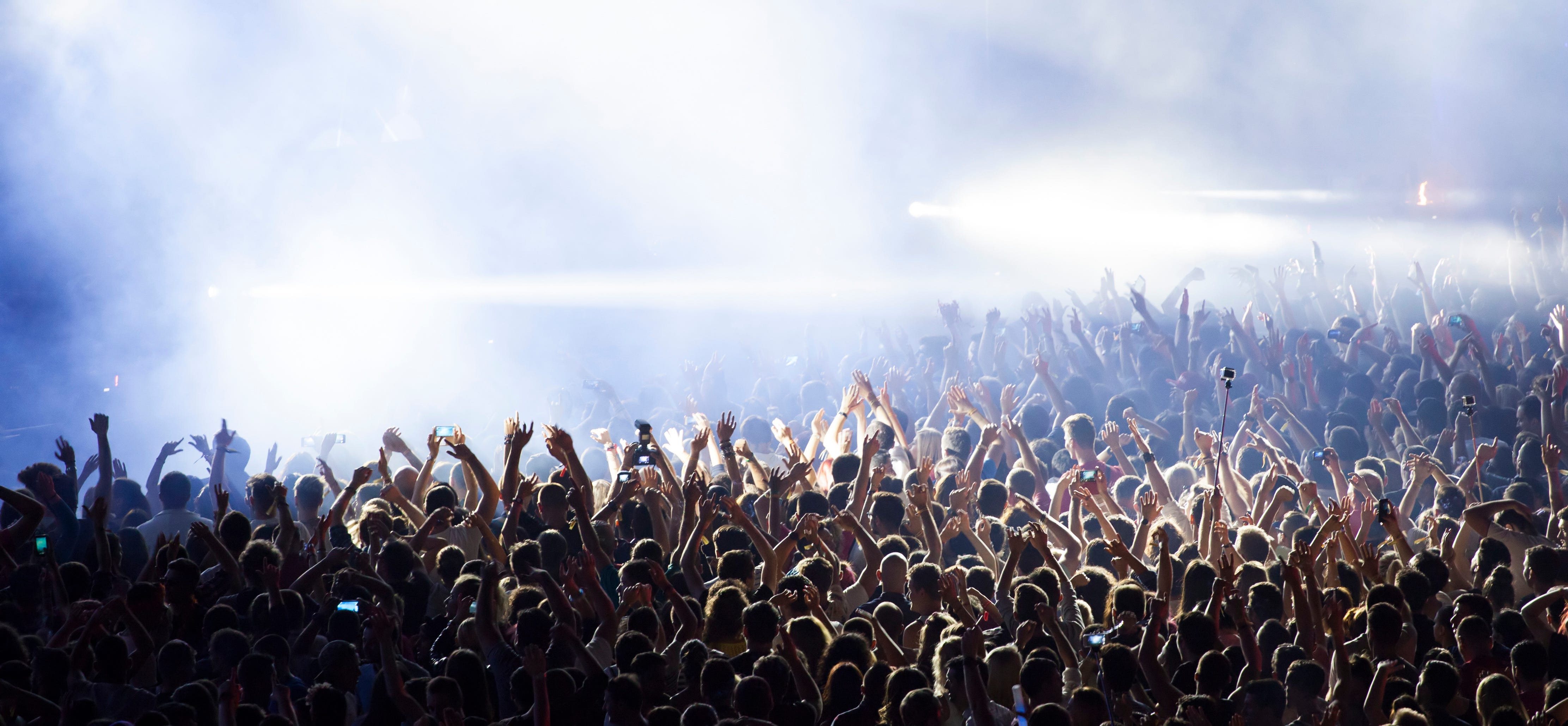
I can’t decide if the argument BOO makes is intentionally less confrontational than it should be but it feels a bit like a piece written in the moment of now. In this moment we’re less willing to go direct, to attack the source with language that leaves no question as to whom it is leveled. And so I will. Fuck the casual listener. At least in terms of your marketing plan.
Expecting them to be the saviors is like expecting weather to plant a forest.
Because here’s the trick – if you activate that small core of die-hard fans, the ones who were given a mixtape at a way too young age, who grew up with music as an indispensable part of their life, they’ll do the work for you and bring those fans along. Don’t fight the ocean, let the ocean do what it does best – bring nutrients from the ocean floor and wash them to the surface. The question shouldn’t be framed as posting less content, it should be whose hands are we going to ensure this lesser amount of content gets to.
We may be reaching an inflection point. As McLamb notes, the more ubiquitous manufactured virality becomes, the more artists will resist it entirely, pulling back from streaming and social media in favor of hyper-local, scene-based growth. A return to the tangible, the real, the unmediated.
But a return to what, exactly? “Tangible” and “real” aren’t destinations — they’re descriptions of a relationship, and relationships require someone on the other end. If artists are pulling back toward the hyper-local and scene-based, they’re pulling back toward us — the obsessive, the outliers, the ones who showed up at 6 a.m. in Truckee. BOO sees the shift coming but stops short of naming who’s standing on the other side of it. I’m not going to make that mistake.
I’m not exempt from this. I’m not some elder statesman dispensing wisdom from outside the system — I’m as much a node in the transmission lines now as my father was the day he handed me that mixtape. Music is one of the main things my oldest son Kerry and I talk about, tank crews and turntables apparently having more in common than you’d think. And in our house, music plays near constantly — not as a lecture, not as homework, just as the air my seven-year-old twins Lucien and Tristan breathe, the same unobtrusive infection my father gave me.
But it’s not just downstream. My brother Patrick has been a transmission line running the other direction for as long as I can remember, and there’s a core group — Hannah, Bethany, Aaron — who are every bit the obsessive outliers I am. We trade what we’re listening to, play snippets for each other, argue about it. None of this is algorithmic. None of it is optimized. It’s just people who care, talking to other people who care, the way it’s always worked.
I know it’s not fashionable to wear your heart on your sleeve about something as “trivial” as music. But some of us do. We bleed for this stuff. And that — not the algorithm, not the casual scroller, not the TikTok hook — is whose hands musicians should be fighting to get into.
BOO gets close. The piece gestures at a coming shift — artists pulling back toward the hyper-local, the scene-based, the real — but stops short of naming what that actually requires: not a better platform, not a smarter algorithm, just more people willing to be what my father was to me. The Who said it best, decades before any of this: the kids are alright. They always were. Someone just has to hand them the tape.
If this found you, subscribe free to Playin’ in a Traveling Band.