

Not many folks give thought to the names of the variety of fruit they pop in their mouth. An apple is an apple. Sometimes it’s a Cosmic Crisp, rarely its Ashmead, and it’s almost never a Maidens Blush. It’s almost never a Maidens Blush (Malus Domestica) because the cultivar isn’t available in the market, we rarely recall names in our rush to get in and out of the grocer, and you’ll only find this cultivar, with a particular penchant for drying, in the most established, that is to say old, of orchards.
The Maiden Blush apple tree is one of the oldest American apples and were popular in Philadelphia markets in the early 1800’s. Beautiful pale skin, lemon-yellow color with a crimson blush, the white flesh is surprisingly crisp with a sharp acid flavor that mellows when fully ripe. These trees are excellent producers, doesn’t take much time before fruit is setting on the tree and has shown some resistance to fire blight -- a common ailment in the Sierra Nevada foothills I call home. Mormons, in their search for a new Zion, planted Maiden’s Blush, along with a whole host of other fruit trees, up and down the Sierra Foothills as they fought the land and the lack of water to establish a home.
Home.
My seven-year-old twins run naked through the trees on the back portion of our two and half acre property without a care in the world. Their joy for life wrapped in a blanket of feral and vigor only a child can possess and maintain for any duration. I wish I had some of their joy, I wish I had some of their innocence, I wish I had their lack of knowing.
Knowing that the world is crumbling around us. Knowing that every political cycle takes a closer to too many edges, knowing that seven of the nine known planetary boundaries have already been breached and we will experience some consequences of climate change. But they’re so young and still filled with an optimism and a hope they don’t yet know how to express.
The knowing is both my burden and my obligation. In Barry Lopez’s “Love in a time of Terror,” the author dances around the question - How is it possible to love and embrace a world that is falling apart? I would ask Lopez a reframed question – In a world that’s falling apart, what other answer is there than to love with a ferocity bordering on the obscene.
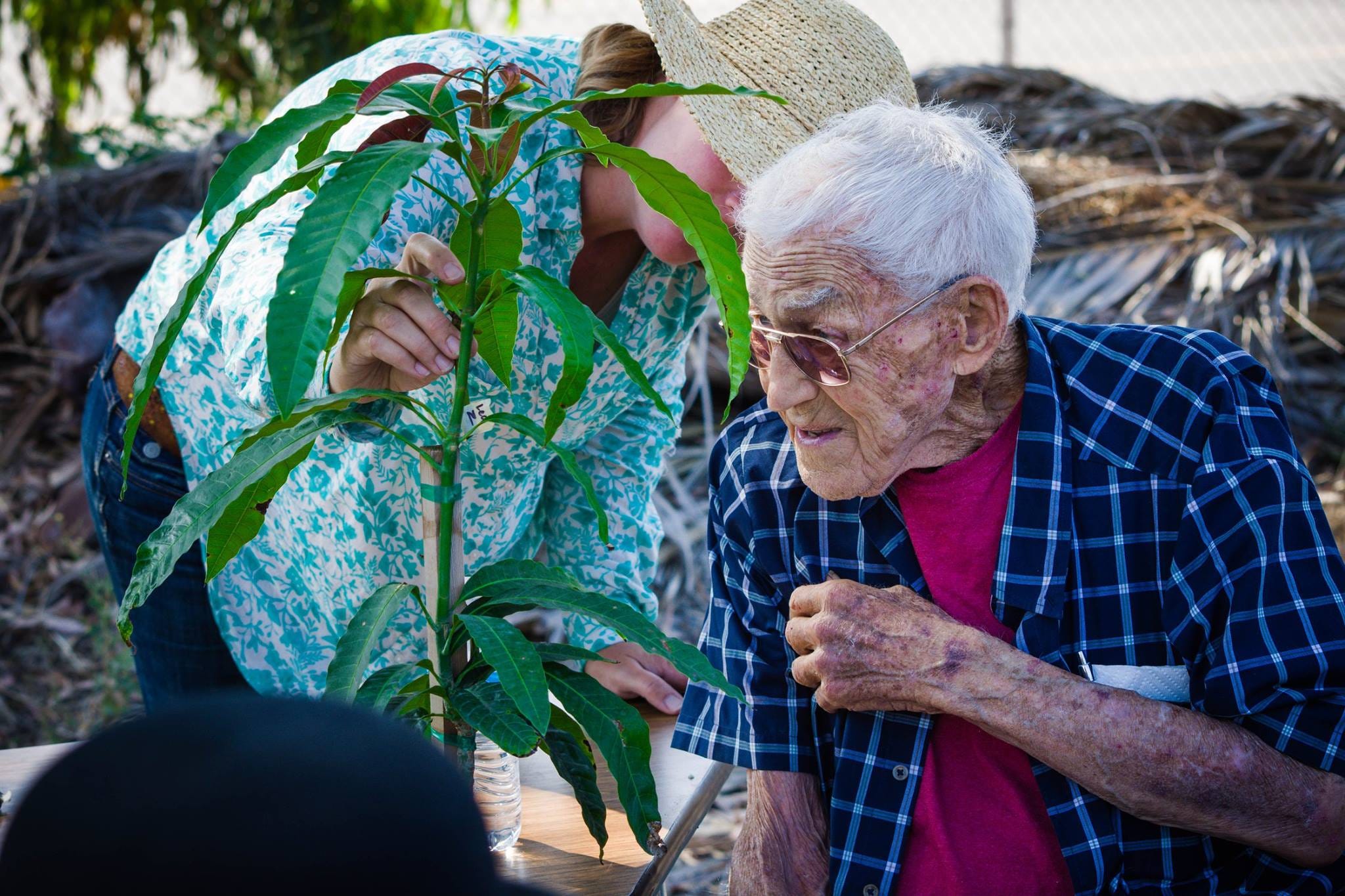
There’s a variety of loquat called the Big Jim. It’s ok if you’ve never heard of the Big Jim Loquat, please see above. It was developed by a fruit grower, unknown to most but a legend in fruit growing circles, by the name of Jim Neitzel. Germain to this – Jim was a fruit grower in San Diego who began his hobby/career in the late 1960, early 1970s. Jim was a founding member of the California Rare Fruit Growers and would travel the world to find cutting or seeds of interesting fruits to bring back to California. When not globetrotting, Jim spent a significant amount of his life in his beloved orchard working on new varieties of fruit.
Jim taught me how to graft.
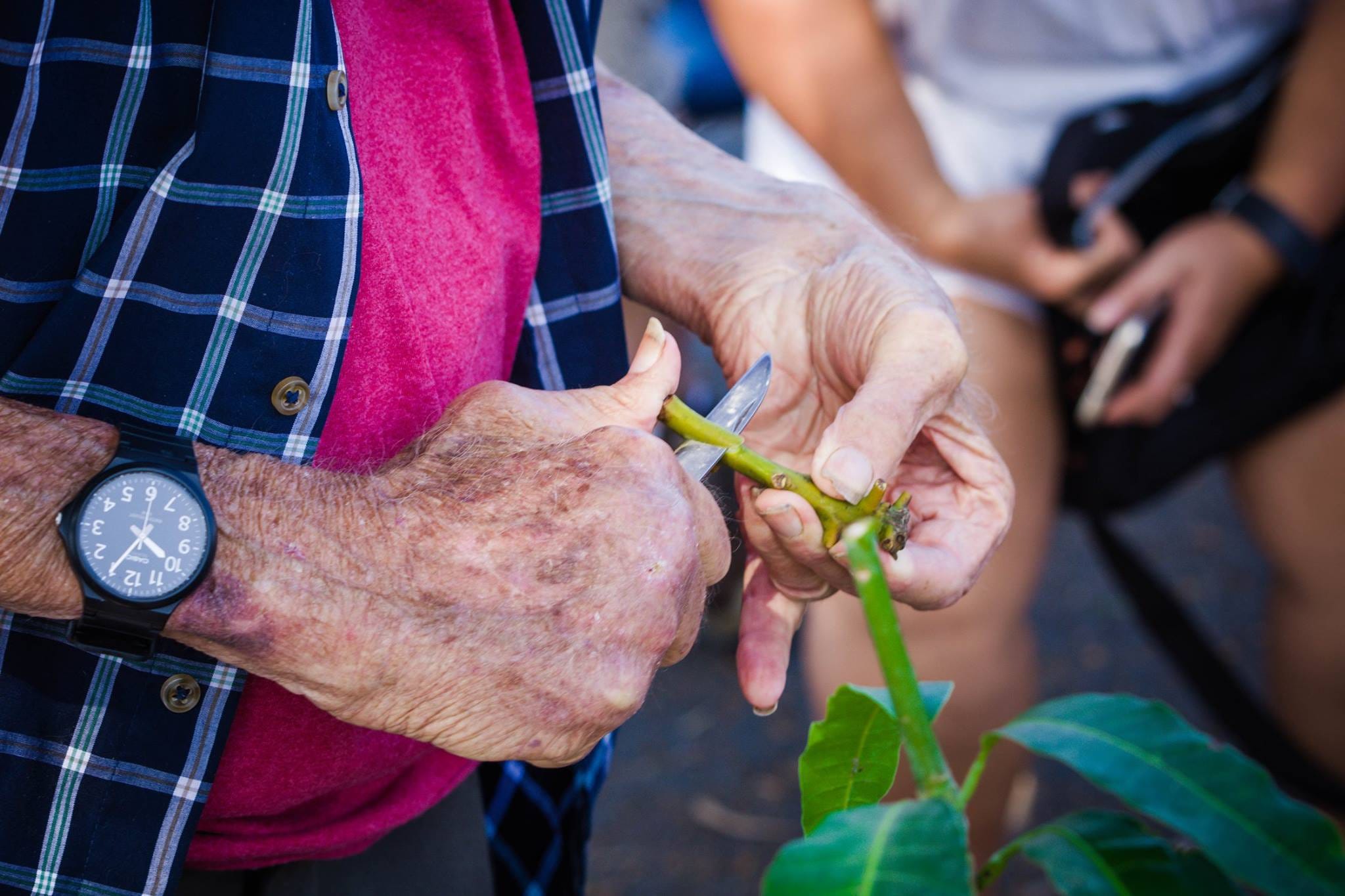
Grafting is the most delicate of arts. It should be science – match cambium layer to cambium layer and all things being equal – wallah! You have a new tree. But it’s much more art; matching size of scion and root stock, the flick of wrist, or more precisely the lack of a flick as you make your precise 45 degree cuts, what cuts to make (the choices are numerous but only one applies to the job in your hand), how tight to pull the grafting tape as you smash the life-giving layers of disparate trees together to make one, what soil to use, how often to water. Science tells us the perfect ratio of N-P-K (nitrogen, phosphorus and potassium) but art tells us what our Earth, our home, provides, what it lacks, and how to make it whole.
What is art but love expressed in some physical manifestation? A painting, a song, a novel… a grafted tree. Holding the rootstock in hand, the already-cut scion would be firmly lodged in Jim’s mouth the freshly cut portion under his tongue. He swore there was something in human saliva that inoculated the scion. I have no idea if there is any truth to this. To this day, as I work through the grafting process, I cut the scion first, place it in my mouth, under my tongue, and then process the rootstock.
Love is knowing.
Knowing there are more than 7,500 varieties of apples grown worldwide. Love is knowing those old varieties are still out there – varieties that have faced California’s fickle climate patterns and prospered. Love is knowing there are more varieties to come. Love is knowing each variety’s needs; chill hours, pollinator, preferred soil type. Love is knowing Jim Neitzel is the Big Jim in the loquat.
The grafts sit in my garden, not yet ready for the orchard. The first year, two year and three-year grafts are all in different stages. Lopez tells us: “We have to reimagine what it means to live lives that matter, or we will only continue to push on with the unwarranted hope that things will work out.” In this I feel deeply he is right. My reimaging is simple.
Find the old trees. Collect wood when the time is right. Graft them, plant them, tend them.
Eventually they will go in the orchard, an orchard that will change the play of my beautiful, wild, children running amuck across the land. An old saying holds that the best time to plant a tree was 10 years ago and the second-best time is today.
My trees of today will interrupt the play of the little ones I hold so dear as they move from the garden to the orchard. Ten years from now, when we’ve come face to face with a world falling down between our ears, those trees, and the many others planted around the homestead, will sustain them and their families.
Love tells us to do something for the benefit of something else. Love demands us to rise to the occasion and give voice and action to ideas. And when the world is falling apart, love tells me to plant an orchard. An orchard lovingly touched and cajoled into life by artful hands.
yes, and when traveling thru, we can think about the best contribution we can make before we're gone
"life shrinks or expands in proportion to one's courage" Anais Nin
info and research papers from UTREP
https://uppertuolumneriver.wordpress.com/