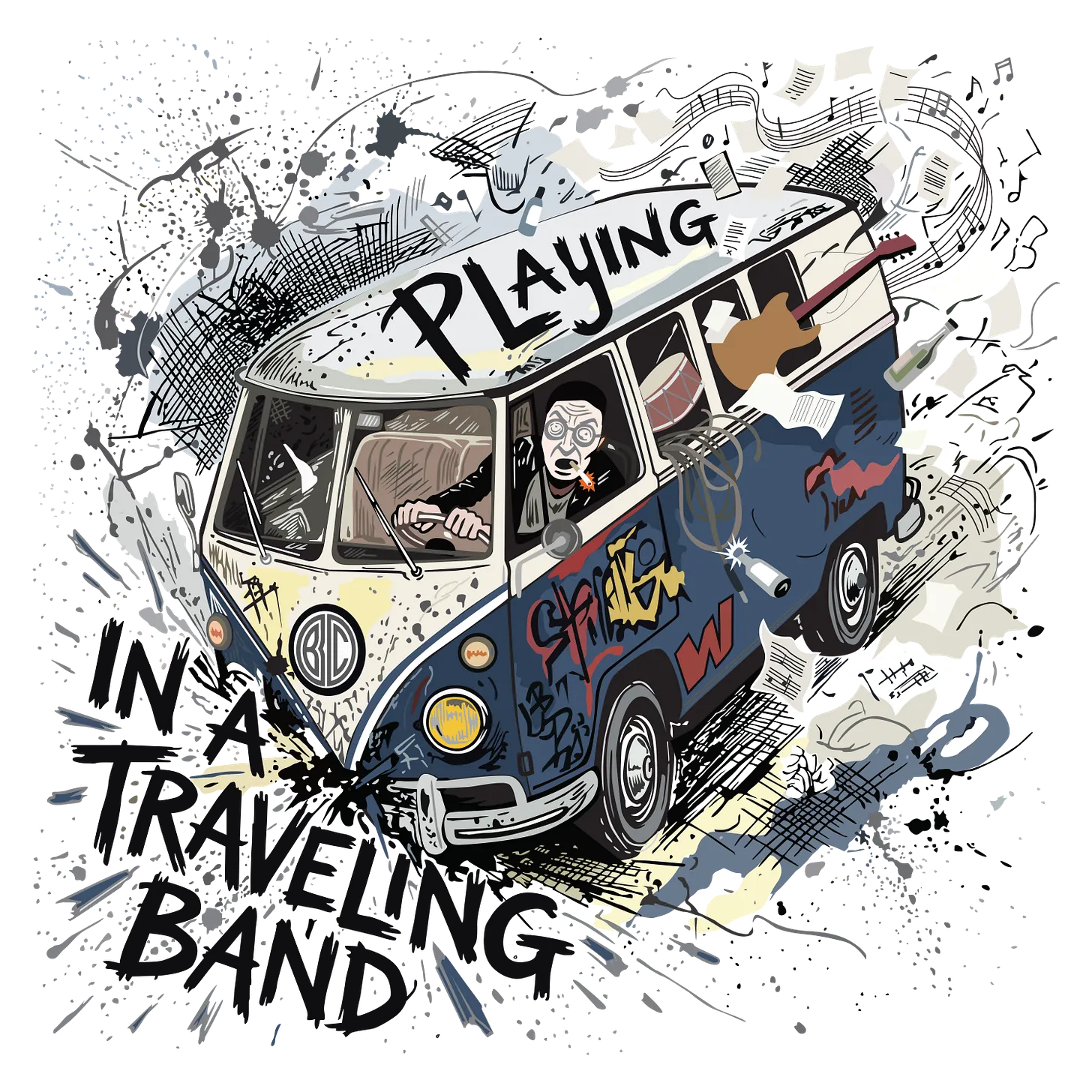
Black Wings belongs to Tom Waits. I’ve chosen not to quote it directly. Go listen before you read this, or after, or both. 🎧 Black Wings
I have this belief, not in God in any traditional sense but something more akin to your off-his-rocker, batshit crazy uncle. He’s a mishmash of all of them — the Greek Fates, Loki, Kali, and Set with a touch of Jesus and the Buddha just to make sure things don’t go too far off the rails. My uncle gave me a coat on a cold February morning in Texas in 1974 and I’ve been wearing it ever since.
You’ve got an uncle too, or maybe an aunt — who knows. I promise you they’re every bit as crazy as my Bob. All of us get a coat; some of us choose to see it, some of us ignore it or slough it off, the weight of responsibility and life too much to bear. Our Aunt and Uncle are always updating the coat — adding a thread, subtracting, fixing something or weakening something when the lesson didn’t hit — but either way, one day we all cash in our chips and that coat goes with you, the story of your life a mad cacophony of color.
Tossing all of my shit into my 1991 GMC Jimmy, I slammed the door and walked around the front.
“That’s it, I’m packed. Look, if you make it, I’ll be there with an apartment ready for us.”
At this point in my life, circa 1999, I wasn’t yet good at putting nails in coffins. I knew what was before me needed to end but frankly, I was too much of a chicken shit to just say it’s fucking over.
“I’ll find a way up there,” she said as I breathed a frustrated sigh and shook my head in begrudging acknowledgment.
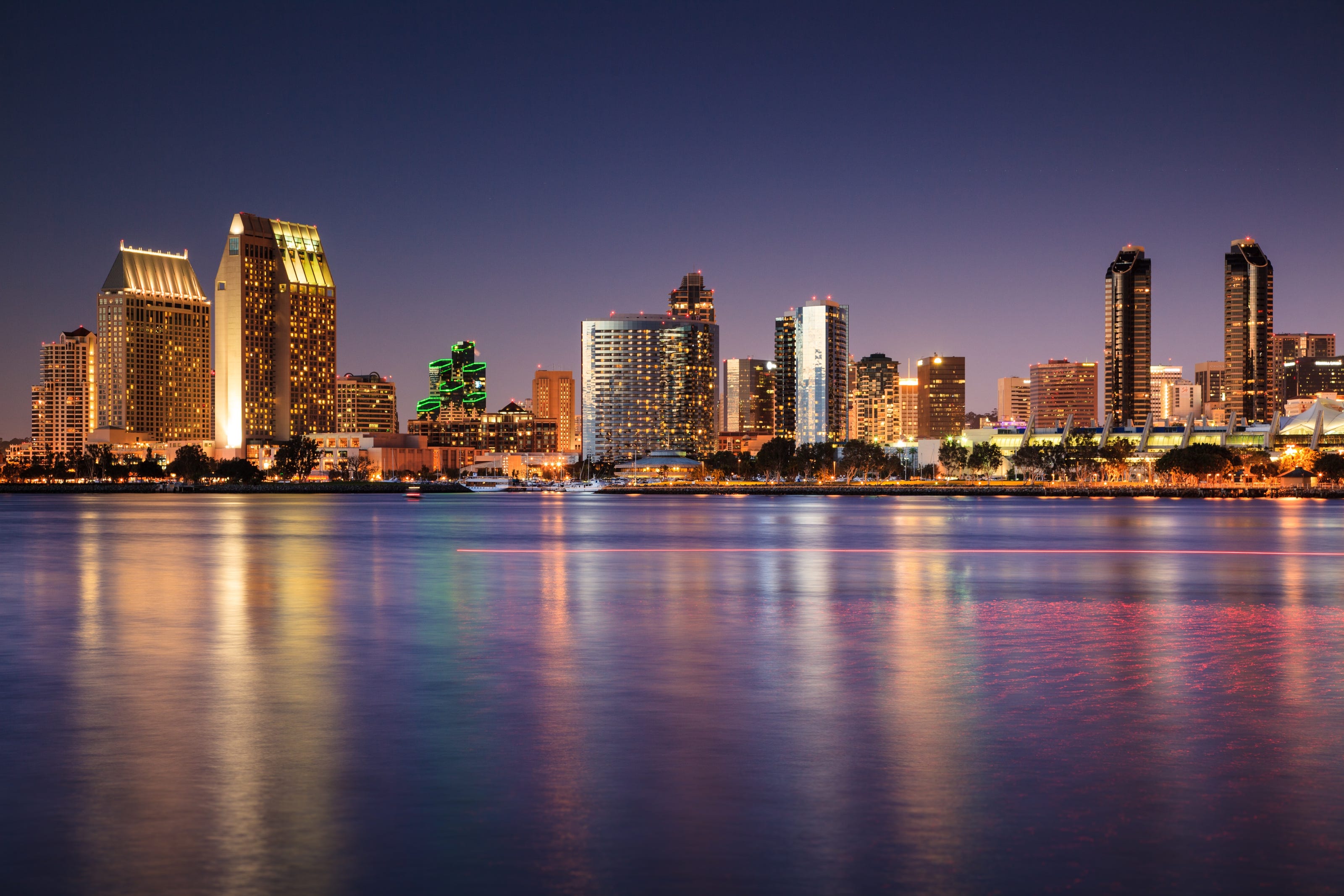
With a pained look between us, I slipped into the driver’s seat, turned the key in the ignition and pulled out of La Jolla headed for San Francisco. The drive through LA was a blur and I don’t remember most of it. Around Tejon Pass, I flipped my CD book open, settled on Tom Waits’ Bone Machine, pushed it into the player and decided what I really needed at that moment was to just let go and let the music take me somewhere else — somewhere away from everything San Diego held against me and everything San Francisco held in my favor.
For more than 30 glorious minutes it did just that until, getting close to the end of the album, the western shuffle intro of “Black Wings” filled my speakers, the sun in its low western arc turning everything before me into gold. Maybe it’s the Texan in me, the one that hears a high-country drifter twang and their ears perk up. Loath though I am to admit my lineage, something knocked me out of my stupor and I paid attention. Something registered — something within me told me to hear these words, hear this music. I did. Unbeknownst to me, a crazy uncle was adding a thread to my coat.
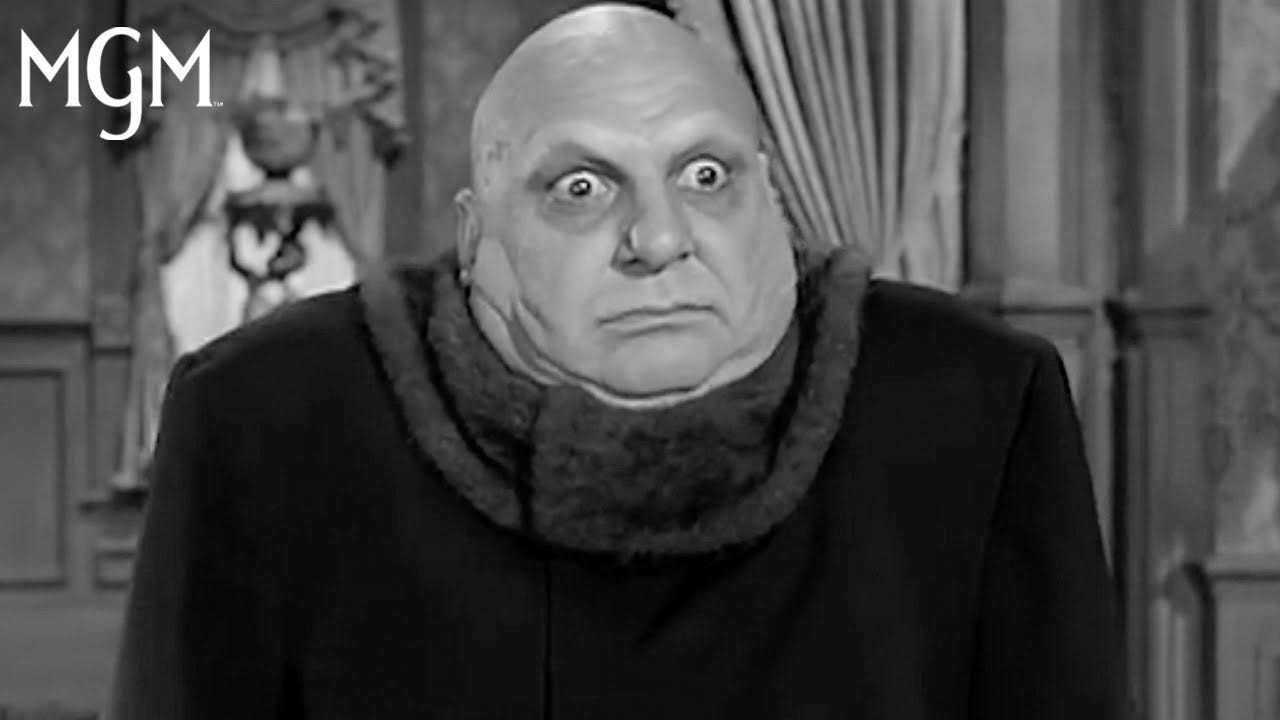
I desperately wanted to call my uncle Fester — that just seemed way more appropriate — but no, his name was Bob. Don’t ask me, I don’t make the rules. Bob has this way of showing up at the most inopportune times and whispering random, nonsensical shit. One of the things I’ve learned over the years is to at least acknowledge Bob’s musings — it might make sense soon or it might make sense ten years from now. There are things I’ve heard Bob whisper that some thirty years on I still haven’t made hide nor hair of. Back then I didn’t know to pay attention. It was right up there with tarot cards and tea leaves.
“You know in the Bible it talks about eye for an eye, tooth for a tooth — doesn’t seem all that far off right now, does it?” Bob whispered.
What the fuck are you talking about?
San Francisco came, my problems eventually followed and in my cowardice a life emerged. A child, a war, not a few near-death experiences and a life that would flirt with chaos for the next eleven years.
But who am I kidding — me and chaos, we go way back.
Bob shows up the way he always does — not a face, not a shape, just that cold drop at the base of my skull, like someone walked into the room behind me and I know without turning that no one’s there. Sliding my jacket on, lighting a cigarette outside Zeitgeist, I feel him lean in close.
“Big moon tonight,” he says — or doesn’t say, exactly. More like the moon says it through him. “Real pretty. Real sharp. Things look pretty in light like that — right up until they don’t.”
I toss my smoke on the corner of Valencia and Duboce, throw my helmet on, toss a leg over the Ducati and make my way toward Market Street. Just enough in me to lower inhibitions, I fly down Market, the concrete pylons holding up the overpass like concrete bones, making my way toward the Embarcadero and a race with a Corvette neither of us knows about yet.
You ever heard a therapist tell you that unresolved problems just get worse without correction? I’m a Marine so I tend to think of it more in terms of firing a rifle. At 50 meters, a one-degree misstep adjusting for wind isn’t a major problem — you can still be on target. At 500 meters? You miss it completely. I didn’t adjust for windage correctly in San Francisco. A series of starts and stops, nights at the bar and a drunken tryst, and suddenly my problem had a nine-month timeline and wanted to move back to her family.
A thread was added.
San Francisco led to Ohio, marriage and the one true thing in my world at the time — Kerouac, born June 2003. I was struggling in Ohio. The Marine Corps had taught me how to be a computer programmer and I had made a pretty good life punching code for various institutions, but nothing in it was filling my soul. I’d get up, slap on the appropriate corporate attire, drive an hour and a half to the nearest major metro, punch in, clock out and do it all over again the next day.
And then it hit me — I’d been an amateur writer and photographer for many years. The Marines taught me how to be a programmer; maybe they could get me this. So I went down to the recruiting station — no dice, too many visible tattoos. Fine. Fuck you. The Army was hiring, specifically the Ohio National Guard, and I raised my right hand once again, this time as a combat photographer. I didn’t know at the time how literal the combat in combat photographer was going to be, but just a few months later I found out.
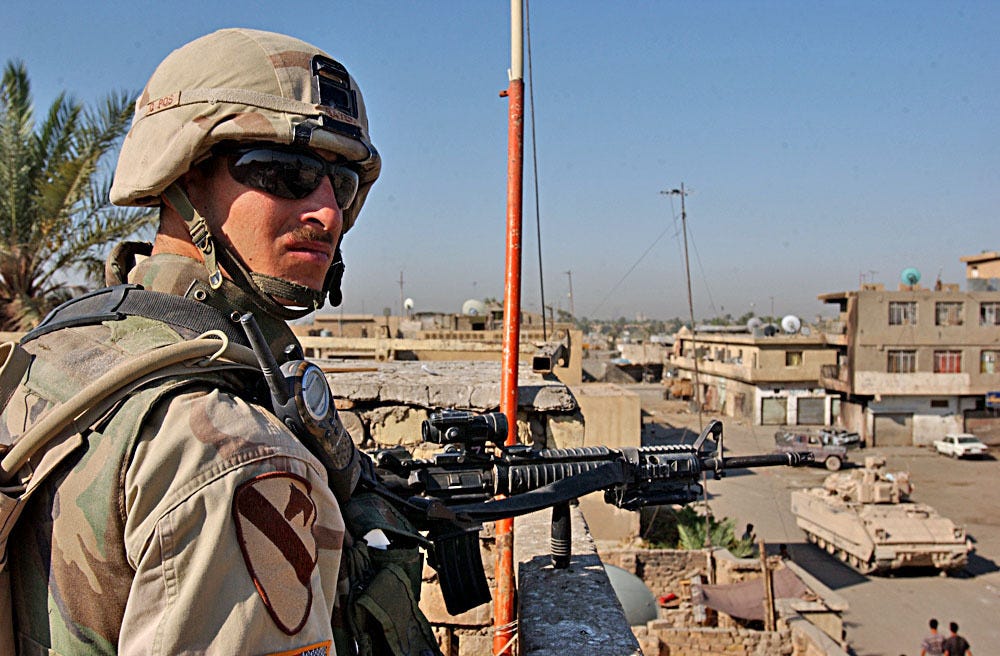
I don’t like talking about Iraq much — it changed me in ways that I’m still dealing with. They really mean it when they say you’re a combat photographer. I just never expected to be stuck on a Sadr City rooftop for 24 hours, ammunition running only-take-the-shot-if-you-have-a-clear-target low, with no idea if we were going to get rescued.
The darkness felt heavy, compressed on that rooftop, a handful of souls fighting with everything they’ve got, determined to go on to the last round. A spotlight dashes across our position and I swear I see the shadow of an impossible figure and in a fleeting moment a chord is struck.
“You’re gonna do something today…” Bob says, his tone somewhere between genuine affection and cold menace. “That you’ll never be able to put into a story. And someone’s going to want to shake your hand for it anyway.”
But we did get rescued, as Lt. Col. Gary Volesky’s Bradley — Lancer 6 — was finally able to breach the blockades and get us out of there.
And another thread was added.
The wind moves across the desert as the stars stretch out to eternity. Only in a place like this could seventy degrees feel so bone-chillingly cold as I stand outside my sleeping quarters back at Camp War Eagle. A sensation from my Alaska home — frostbite — pinches the tips of my ears. Not possible, but the sensation is the same, and I hear a whisper.
“You know,” the familiar voice coos, “some things — once they get loose, there’s no putting them back. No fence holds them. No lock keeps. You can chain it down all you like, it’ll find a way out… every single time.” The last line delivered in a sing-song cadence someone somewhere might find comforting but works to fill me with dread.
I was a problem child in the sandbox. The guy with all the attitude but who came back with the receipts and the scars. There was a Master Sgt. who just loved to edit everything I wrote, strip out all of what actually happened and deliver a sanitized version that stood proudly on the front page of Cav Country — the official newspaper of the 1st Cavalry Division over there. With. My. Byline. Guys on the line would ask me what the fuck and I would just sigh, wave my hand in the general direction of Baghdad and the Green Zone, and mutter something about the duality of man and the incompetence of higher headquarters.
After sixteen long months, the sandbox finally fell away — not before elections, not before many more engagements, but it finally did. I had no idea about the storm that was brewing off the Gulf of Mexico, about to slam into a major American city.
Home in March, New Orleans in August. Katrina slammed into the Crescent City with a fury I all too closely recognized. I had been in Florida, desperately trying to get back to Ohio as Katrina formed, moved through and settled in the Gulf. People remember the outcry — why wasn’t the National Guard doing more, where was the help, the relief. We were sitting there just waiting for the orders, going slightly insane with each passing day we were left off the field. Finally, the order came. We loaded up and convoyed down to Camp Shelby, Mississippi before I was dropped into the 9th Ward with an infantry battalion.
One of the most surreal sights I’ve ever witnessed — armed American soldiers walking up and down the streets of an American city. We took to boats looking for the dead. We found them. We tore through roofs to search homes and leave the well-known search marker on each building. We washed in half-developed strip malls using rigged-up solar showers as helicopters flew low for far too long. Folks would wander in seeking medical treatment and we rendered it before hitting the streets once again. For six weeks we did the work — Six Flags underwater, warnings of gators in the water — and watched as the line of gunk slowly crept lower and lower on each house.
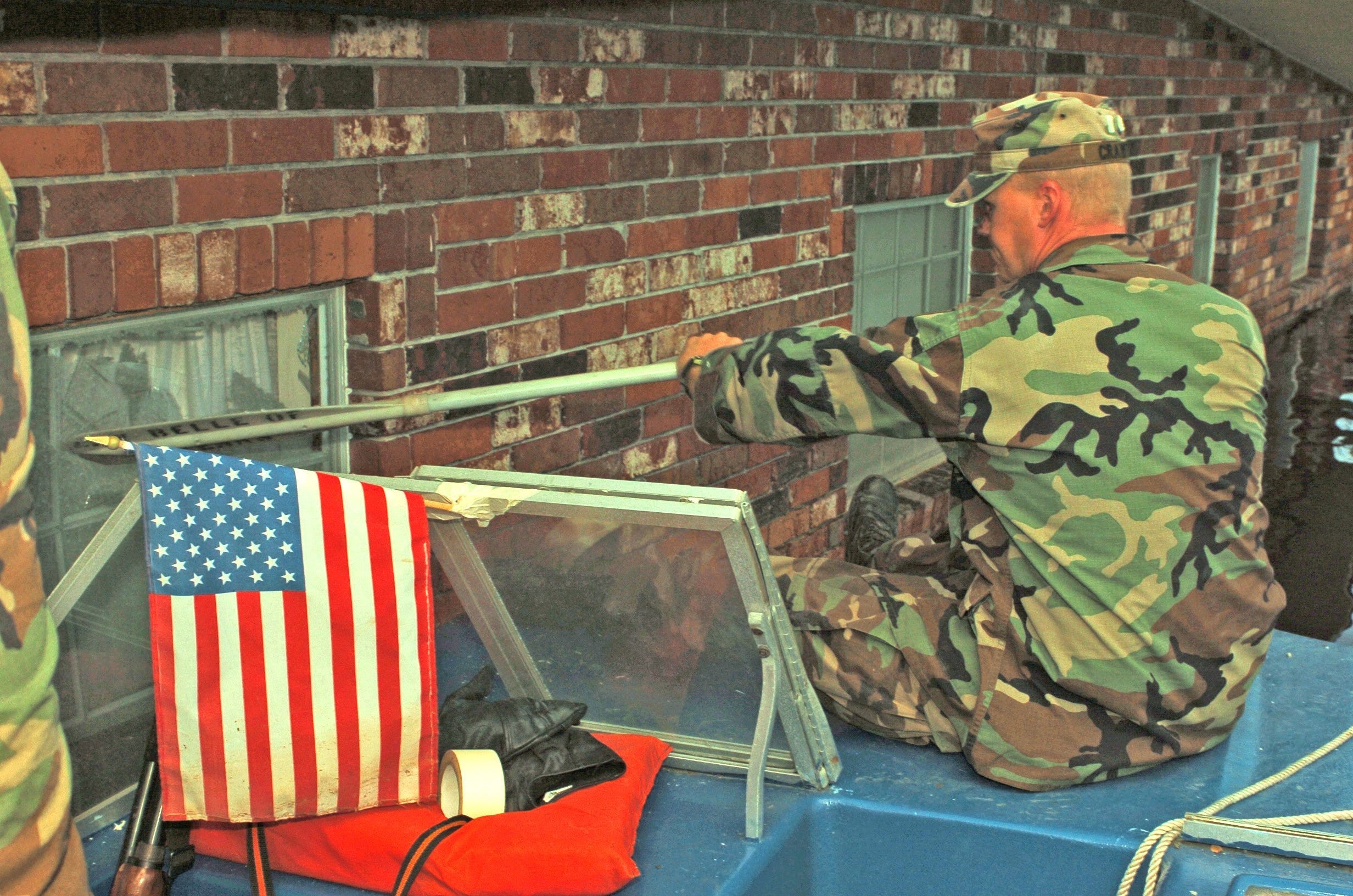
And another thread was added.
Ohio became too small. We moved to Arizona, where I got a Harley and found reasons to be on long rides between Phoenix and Tucson, stopping at Picacho Peak for a couple of smokes and to take it in. Arizona came to an end and in a desperate move I stuffed what I could into the Sportster’s saddlebags and made for Wyoming. New Mexico did its absolute best to kill me with an October storm that had me holding my bike at a near 45-degree angle just to stay straight on the road. Hypothermic, I parked the Harley outside Denver and called Patrick, living in western Nebraska, to come rescue me.
Wyoming was its own brand of chaos. Running a newspaper in a small town requires a certain type of crazy. Apparently, I was up to the challenge. I did all right, endeared myself to some while never being a local to others. Between the high school football and basketball games and the local bar where the real news took place, I covered city business and did my best to make that paper in Cheyenne earn every subscription they took from us. Maybe I tried a little too hard. As my marriage was falling apart so too was any goodwill I’d earned in the previous years. It’s a hell of a thing to have a sitting city supervisor tell you during open session that he can have you “removed” and no one would ask a single question. My last few months in Wyoming, I slept with an over-under, loaded, beside my bed. My career imploding, my marriage going from hot mess to absolute shit storm, I got the order to deploy yet again.
Already fearful of the law, she decided that was the moment to move back to San Diego — a sort of get out of Dodge while the getting was good. That was the end. It didn’t happen right away, but now I had clear eyes. That was the moment I finally took all the suitcases thrown through a window and said enough’s enough.
And another thread was added.
Did I mention this was the time I joined the fire service? No? Well, I did, and it would set in motion a path I still walk today. Pine Bluffs is situated on Wyoming’s eastern border with Nebraska along the Interstate 80 corridor. The bluffs the town is named for make for a tricky set of curves as you travel at Mach 5 down the interstate working hard to get wherever it is you’re going. It’s nearly a straight shot between Cheyenne and Pine Bluffs until you approach town, when a series of curves wrap around the bluffs. That’s not the tricky part — the bluffs work to shade most of the roadway, throwing black ice onto the road that folks aren’t ready for when they approach. I was in the fire service there, but the overwhelming majority of what we dealt with beyond the occasional grass fire was motor vehicle accidents as unsuspecting folks found out just how deadly black ice is. There are accident scenes from that time that haunt me to this day, playing on a perpetual loop in those moments between sleep and waking.
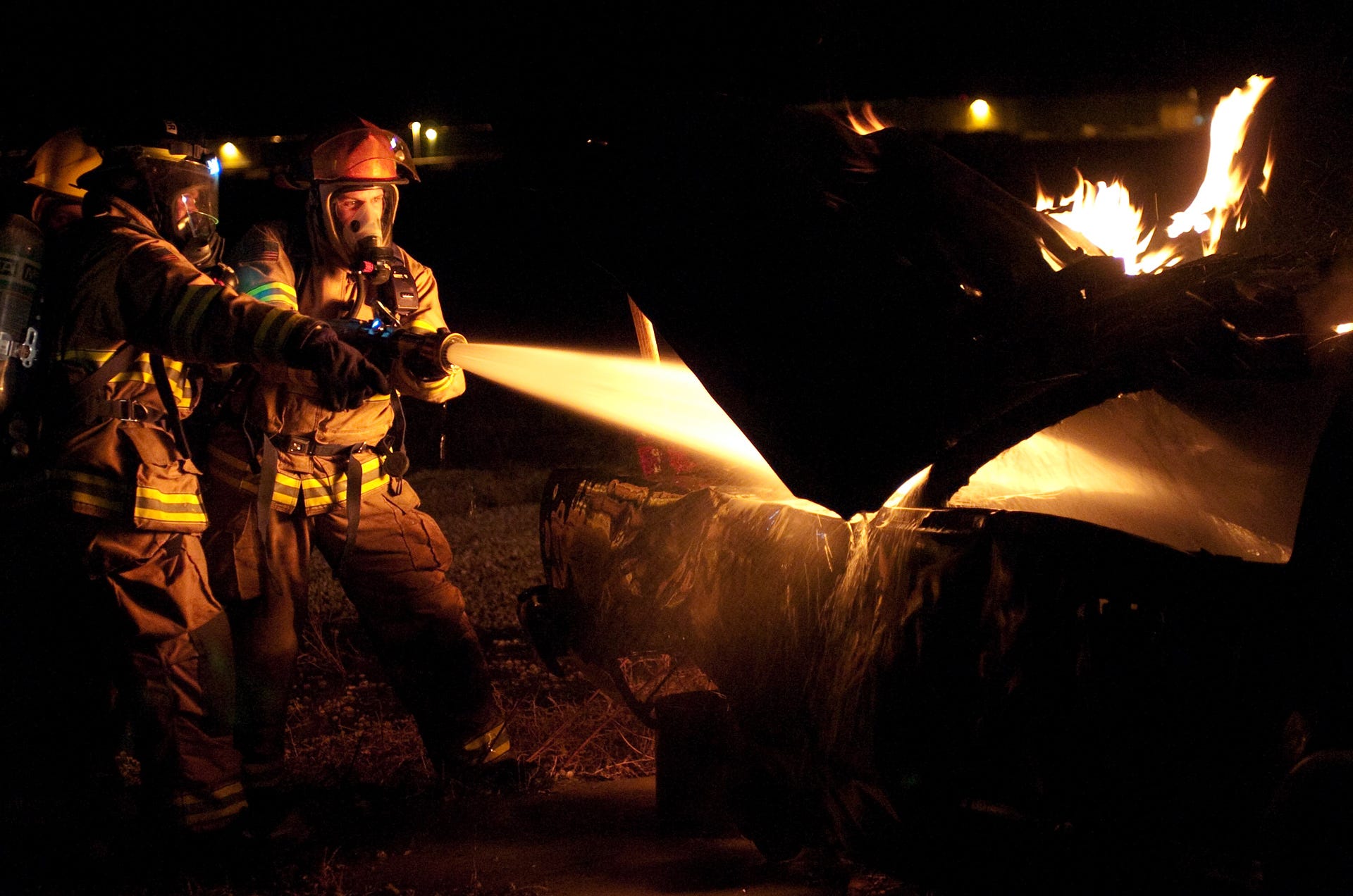
It was probably around this time I started connecting more and more with “Black Wings.” The thing about wearing something for so many years is it begins to just slip into the background — it’s always there, but you don’t really notice it when you look in the mirror. Bone Machine is one of those essential albums in my life and it’s never far from my music player. If Bone Machine was essential, then “Black Wings” was paramount — a song on constant repeat in my mind’s jukebox.
One of my responsibilities as managing editor was delivering newspaper bundles as far away as Grover, Colorado — just about 30 miles, which gave me a lot of time to listen to music alone in the middle of this life storm. Open plains and nothing but cows gives you plenty of time to reflect on what you’re hearing. It was more than one Wednesday where I would pull over to the side of the road, my only company a field of wind turbines, and just weep, trying to figure out what I was going to do next.
Bob finds all kinds of ways to be heard — a cold chill, a wind that bites, and sometimes it’s the movement of tall grass in an open field dotted with wind turbines.
“You forget,” he says, quieter than usual, “the same person who’s seen what you’ve seen is also the person who’d jump in the water without thinking twice. That part of you didn’t go anywhere. It’s just been waiting for you to need it again. Time to remember who you are. Not who you’ve been. Who you are.”
And another thread was added.
Next was already decided for me as I packed up a few things and joined the Wyoming National Guard for a deployment to Guantanamo Bay, Cuba. For nearly a year I called the naval station home. Things were getting real between me and her and I was slowly finding my way into one too many bottles of Jameson — never too much to get me in trouble, but enough that those who knew me knew something was up. Diving was the only thing that kept me sane that year, and if I wasn’t at the office, chances were good I was 70 feet below the ocean’s surface. At one point a dear friend accused me of being a member of the cult of scuba. She wasn’t wrong.
In the ocean I found a peace that was nowhere in sight above land — the threat of death due to a mistake on your part has a funny way of forcing you into focus. Once below the surface I would do my best to just be a visitor in this foreign but growing familiar landscape. I would tick off my remaining airtime by mentally singing songs as I moved among the reefs, fish darting away from my presence, finding simpatico with a massive sea turtle. Somewhere between that sea turtle and a shot of Irish whiskey I told her we were done. She had no reason to believe me — we’d been down this road before — but this one stuck, and I came home to carnage on multiple fronts. The storage unit we’d agreed to leave untouched had been ransacked — things taken, things destroyed, things my mother had made left in tatters alongside a note I won’t dignify by repeating. She’d spent my deployment rewriting history in Pine Bluffs, and I came home to a town that had heard a version of me I didn’t recognize.
“Some promises are soft,” Bob says, somewhere off in the dark. “Bend whichever way the wind blows. And then some get put through the fire enough times they come out the other side like iron — and once that happens, there’s no bending it back. People feel that in you before you say a word. Some of ‘em are scared of it. Some of ‘em have been waiting their whole lives to stand next to something that won’t bend.”
Only to find that same scorched earth campaign had been deployed in San Diego. While in Cuba I’d been reading about a growing movement back on the mainland — Occupy Wall Street — and I knew as soon as I got home I would be throwing myself into it. San Diego had an active movement but for reasons I couldn’t figure out I had the hardest time connecting with people there. Even those in the veteran community, those who should have been my natural companions, kept me at arm’s length. No matter — this was a tune I was familiar with and I pushed ahead and availed myself to the work. Sometime later I was talking with Doc, a former Navy corpsman who’d become a good friend, who told me about the campaign she had launched against me just before my arrival. Divorces are ugly. Mine was Lovecraftian.
I met K at this time, seeing her boots before I saw her — snapping her photo, her holding her People Over Profits sign in a blue rain slicker as we worked on an effort to shut down western ports all the way to Oakland. I was staring at her image before I even knew her name. The port shutdown didn’t work, but K and I did, forging a relationship as the two people who always showed up, always put in the work.
And the circle completed itself.
Eventually, when you carry something for long enough, you start to notice the details — the rough edges alongside the well-worn smoothness. The coat you’ve worn all of your life contains the story in its threads, each strand a moment woven into the bigger piece. Torn bits patched over, some threads ancient and strong, a guiding principle. I couldn’t tell you the exact moment it happened, but there was a day — listening to “Black Wings,” hearing the words deeply, seeing myself line after line — when from out of the shadows the universe popped up its ambivalent head.
“Glad you finally made it,” Bob said. “Took you long enough to get here.”
Drip torch in hand, I walked over to Adam and we evaluated the control lines we’d put in the day before. About thirty people had shown up to learn how to use fire to steward their property in the Sierra Nevada landscape we call home — the landscape I call home.
“It looks good, I think we’re ready,” I say to Adam.
“Yep, as long as we keep people on the firing pattern we’ve discussed, I don’t see any holding issues.”
We both turned and walked back up the hill as Lucien and Tristan, my twins, ran ahead of us giggling in their seven-year-old joy — they were going to get to play with fire and they knew it. K, keeping an ever-watchful eye on the two, reminded them to do exactly as I said — no arguing or it’s back in the car.
A drop of flame falls from the torch — catches, holds, spreads along the line exactly as it should. For just a second I swear I can see him in it.
“I’d like to introduce you,” he says, “to you.”
And then he’s gone — not vanished, just burning, same as everything else on this hillside, doing what it’s always been meant to do.
And another thread is added.
I pass the torches to those who’d come and, with a few words of safety and encouragement, let the firing operation begin.
This is where I find myself these days — at home on a national forest, spending my free time helping people understand the benefits of good fire, one more thread in my life’s coat being added. Finding yourself in a song, especially one as quietly unsettling as “Black Wings,” can be one of those things that makes you dig deep into who you are and sit with things not entirely comfortable. Flip that coin. It’s also one of the most deeply rewarding — being seen, even if only by yourself.