

Heading west toward San Francisco, we’d just come down out of the Sierra Nevada foothills as Highway 108 stretched out in front of us. Still about 100 miles from our destination, California’s vast Central Valley sat between us and the Coast Range.
“So you thinking Portugal?” K asked as the monkeys, absorbed in their own storybook worlds, played in the backseat.
“It’s got to be something similar to where we are now,” I said as I quickly glanced over to her, our concerned eyes locking for a second before mine returned to the road.
This had been an ongoing conversation between the two of us the last few years. Nothing felt safe in our native country and more and more the “cruelty being the point” was living up to its ideals.
Leaving. Leaving everything we loved about this nation, packing it all up and just going somewhere, anywhere else. We were married in one of this nation’s National Parks. My twins spend most of their days on one of the nation’s oldest national forests. To give it all up, to start over…
As I pondered all of this, a song came back to me, a song that seems like it’s always there, just at the edge of a waking dream ready to reassert itself when the moment calls. This stretch of open, golden expanse dominated by oaks always reminded me of the drive out to Jamul and I was back in our San Diego home, to a time before the twins were born.
It’d been a long day. Working all morning on the farm then hurrying home to do some work around the house, exhausted, K and I slipped off to our bedroom to veg out for a while before calling it a night. We were knee deep in the modern western series Longmire, having recently returned from a Wyoming trip and feeling a bit of cowboy nostalgia. K’s head resting on my shoulder, laptop nestled on my legs, we kept each other awake through the episode bone-tired though we were. And then I heard the opening lines of a song as the credits rolled and it stopped me cold — the first time a song had done so in many years.
Exhaustion temporarily hijacked, I immediately took to the internet to figure out what that song was, with its dreamlike sequence opening and the comforting repetition of the main guitar line. The soothing voice that carried a song of sadness like a southern gothic magnolia both blooming and wilting before your eyes.
“The Dark.”
The Bones of JR Jones?
Who are these guys and why had I never heard of them?
When I say these guys, what I mean to say is guy — as in singular. There is an interesting phenomenon in music, call it the punk to folk pipeline. Young kids the world over, eager to play in a band, pick up a guitar and suddenly wake up to the Sex Pistols, the Ramones, or Joy Division. Many stay on this well-worn path but for a select few, the journey leads them down roads they didn’t expect. For Jonathan Linaberry, the JR in The Bones of JR Jones, steeped in the punk aesthetic of the early 2000s, the path diverged when his father gave him a collection of music that harkened back to a different era.
“I grew up listening to punk rock. I fell in love with the blues and folk music when I was 18 or 19 years old after my dad gave me a collection of American roots music, and it totally changed the landscape for me,” Linaberry said in a 2016 interview with Mother Church Pew.
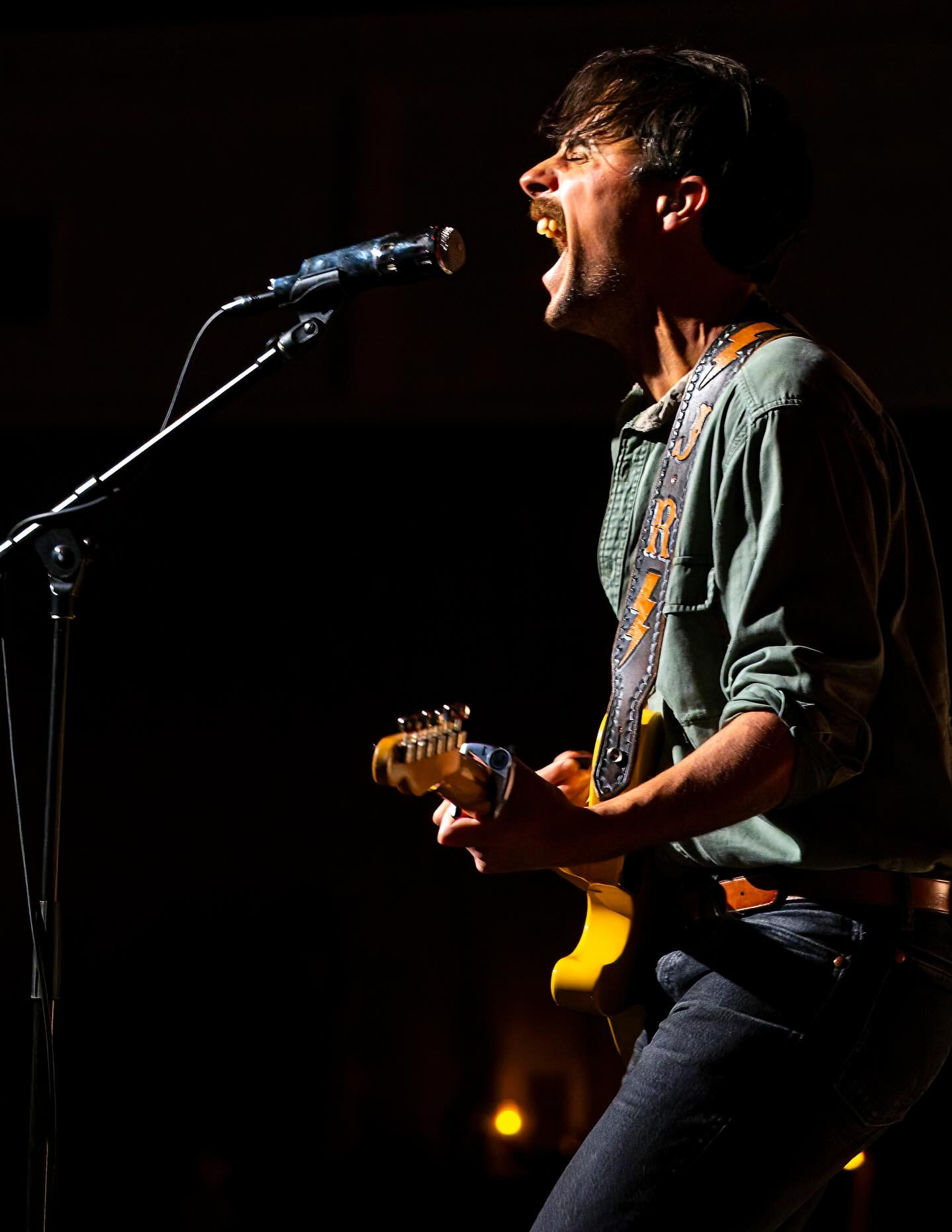
One can claim lineage through one of two ways — earned or given. Most of us know the story of the given: the kid who receives their parents’ name and fortune only to squander it away, no understanding of what it took to get there. Then there is the earned, where the roads less travelled are taken, a light shone on those darker passageways. Linaberry, a classically trained pianist who cut his teeth playing punk rock in bands outside of Syracuse, New York, armed with a collection of Americana music, headed off to New York City and the Pratt Institute to study art and design. Here is where the lightning would strike — in the form of a chance listen in a friend’s dorm room.
“I was in a friend’s dorm, and they were playing a guy named Blind Lemon Jefferson, this old Texas bluesman from the late ‘20s,” Linaberry said in an interview with Salt Lake Magazine.
Raw, ugly, emotive — this recording of the legendary bluesman was more authentic, more punk rock than anything Linaberry had ever heard and it struck something inside him, something deep that would lead him on a path to find the field recordings of Alan Lomax.
In 1933, Alan Lomax set out across the American South and Midwest alongside his father John, determined to document and preserve the traditional and folk music of the region before it disappeared entirely. Working with a portable recording machine, Lomax captured anyone willing to sit for him — one Saturday recording Jimmie Rodgers, the following Sunday the Carter Family. The resulting archive, now housed in the Library of Congress, includes some of the earliest recordings of Lead Belly, Muddy Waters and Woody Guthrie. The Lomax recordings are both invaluable and complicated — questions of consent, compensation and a white Northern academic extracting cultural material from poor Black and rural communities without meaningful reciprocity have followed his legacy ever since. But what they preserved changed Linaberry permanently.
At first blush, punk to Americana seems counterintuitive. Blow the dust off and it becomes immediately obvious — the connective tissue is authenticity. The bootleggers running ‘shine through Appalachian hollers and the punk kid playing basement shows are animated by the same spirit — raw, unmediated, outside the sanctioned channels of polite society. It’s both lived experience and aesthetic that shows itself in the lyrics of the music. That thread runs from “Which Side Are You On” echoing from the hills to Dylan’s protest folk and John Prine to the Dead Kennedys’ “Police Truck” without ever losing the plot.
Whether it’s instinct or training doesn’t really matter. Not content to solely abide the folk or punk traditions, Linaberry adds a dash of Faulkner’s Southern Gothic weight both lyrically and musically — the beauty and rot sitting side by side, the past refusing to stay buried. Put all of that into a band and you have the world Jonathan Linaberry is working in.
But it wasn’t right away. The love of American roots music came to him in his late teens and early twenties. Linaberry would need to go on, start building a life — bartending, teaching preschool, playing in an acoustic group called Feverfew. Taking a page from his punk background, absorbing the music fully, coupled with hard-earned experience, before being ready to put his own touch on it. He released his first EP in 2012 with The Wildness, his first full length, Dark Was the Yearling, in 2014. Twelve years of walking the walk before The Bones of JR Jones was fully ready to make its entrance on the world’s stage.
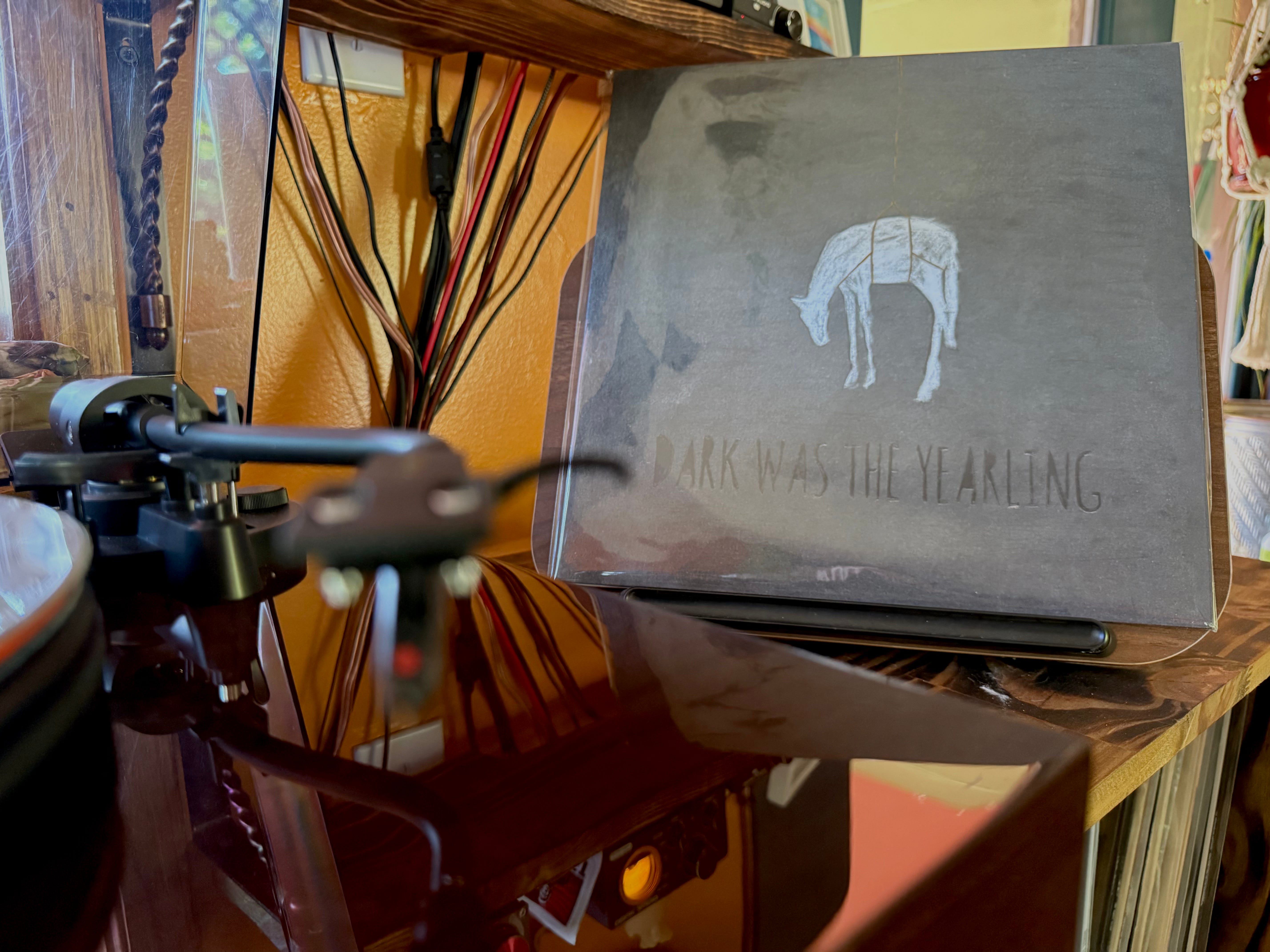
How you hear Linaberry has everything to do with how you’ve experienced him. His live performances and what’s captured on his studio albums are, at times, two completely different animals. Linaberry himself has acknowledged the gap — the atmosphere created in the studio just isn’t there at a solo performance level, which is to be expected. Lower the tone arm on side one of Dark Was the Yearling and “Dreams to Tell” fills the speakers, the staccato of the guitar setting the mood while Linaberry’s voice stands in for a harmonica on the song’s opening wails. Contrast this to his live performance of the same song — just the man on stage with only his banjo, the tempo brought significantly down. What shows up as a Saturday night rocker on the album is turned into a Sunday morning hymnal when performed for an audience.
As the album unfolds across 41 minutes and 12 tracks, all of America’s musical ghosts are on display holding space for their newest acolyte — the chain-gang hum that opens “Ticket Home,” the Doc Watson-like guitar picking on “Hearts Racing,” the echo of every Delta Blues singer long forgotten on “Fury of the Light.” The casual listener will find something deeply comforting and familiar within the album while the more serious listener will find themselves compelled to take a journey — a journey that is the songbook of this nation so many of us call home.
And then there is “The Dark,” the song that forever set me in Linaberry’s orbit like a moon to the Earth. I’ve always preferred my music on vinyl — “The Dark” breathes life into side two of the record. The opening sequence transports you through a haze of humidity and clouds to a land of Linaberry’s making. “All our sweetest sins, carry them to our end.” And you’re there, walking among the dilapidated house watching a family keep its secrets inside like a narrator in a Faulkner novel, taking notes to carry back to the world. The music soothing, the lyrics unsettling, the image painted something all of us carry — lived or inherited.
Somewhere between the Delta and doling out juice boxes, K and I return to the expat conversation.
“Only American hubris would call it expat-ing and not immigrating,” I say, the disgust just on the edge of my words.
K snickers at the observation before responding.
“I don’t know, I don’t want to give up just yet and I also don’t want to wait until it’s too late,” she says, her eyes turned toward the landscape outside the window. “This is one of the most beautiful countries I’ve ever been in and I really don’t want to give up on it.”
“Me either,” I say, realizing my fears are the same as hers — not wanting to leave too late but not yet willing to give up. “I just wish there was some sort of a speck out there right now that felt like hope.”
The speck is already there. It’s been playing on my turntable for years.
Tilting the rearview mirror to better see the monkeys, I stare for just a minute at those two little miracles sitting in the back seat. I bring my gaze back up to the road, K is still looking out the window. I take her hand, bring it to my lips and gently kiss it as I’ve done so many times before.
“It’s not time yet, my love,” I say to her. “And what we’re building will give us some leeway should it come to that. All of this, everything before us, it’s worth fighting for — and you and me and those two munchkins in the back, we’re fighters.”
“I know,” she whispers as she squeezes my hand, gently releasing pressure but not my hand.